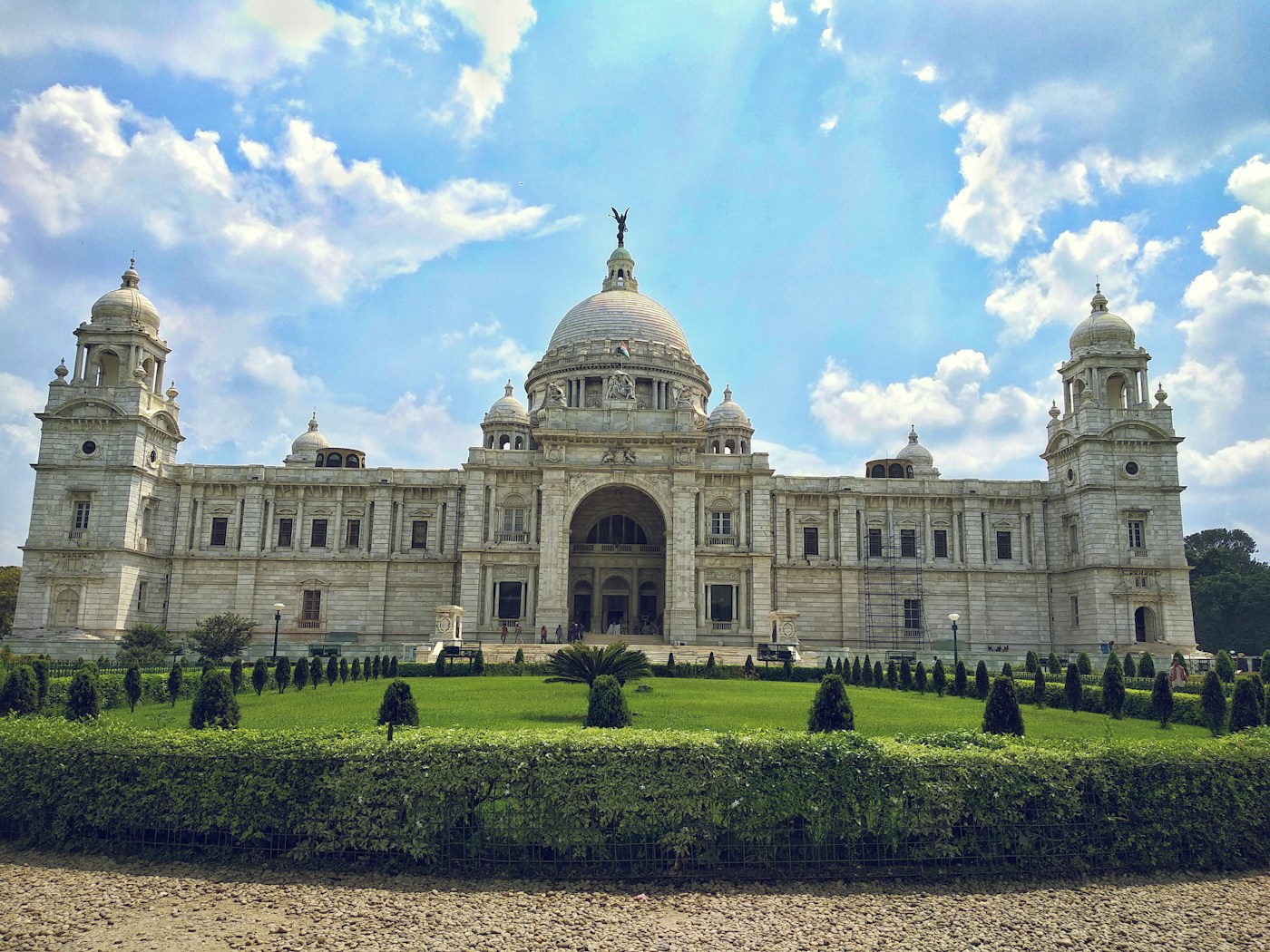
Kolkata, the 2026 city reportIndia · population 14.85 million metro · index 6.0 of 10
An independent report on living in Kolkata, scored across cost, safety, weather, jobs, healthcare, education, transport, and twelve more axes. No tourism board input. No paid placement.
6.0
Index Score
Kolkata, IndiaCover · The City Report
№ 01 , The Quick Take
Kolkata in 200 words.
Kolkata scored 6.0 on the everycity index in 2026. The headline numbers: rent on a one bedroom in Ballygunge runs INR 28,000, the monthly all in cost lands at 600 dollars for a single resident, the personal income tax position is progressive 0 to 30 percent under the new regime above INR 15 lakh, and the safety score is 6.6 on the same 10 point scale we apply to Mumbai, Delhi, and Manila.
The case for Kolkata: the cost arithmetic is the lowest of any major Indian metro, and the cultural depth is the deepest. Read Kolkata vs Mumbai for the domestic benchmark and Kolkata vs Bangalore for the tech relocation contrast. The case against, when there is one, is named in section 12. The full numbers run by category through this report.
The data feeding this report comes from our methodology page, with primary sources at the bottom of the page. Numbers are May 2026 unless stated otherwise. Currency is INR with USD conversion in parentheses where the original is not the dollar.
One reading note. This is the long form report. If you only want the headline numbers, the city score generator returns the index figure with custom weights in 30 seconds. If you want the comparison view, the Kolkata vs Bangalore page is the first stop. For the country context, India places Kolkata on the national table. For the regional read, Asia sets the broader comparison. The cross references inside this page run thick deliberately.
For new readers: this report sits inside Volume 04 of the everycity atlas, our 2026 issue. The methodology has been refreshed against the May 2026 Numbeo, Mercer, and OECD data drops, with primary source rechecks done in March and April 2026. Where the numbers conflict, we use the lower of the published values for cost and the higher for risk. The next refresh ships August 2026.
№ 02 , Cost of Living
The monthly arithmetic.
Twelve line items priced in May 2026 for a single resident living in a central one bedroom. Family of four numbers run 2.2 times the single figure.
Line item
Single, 1 bed
Family of four
Rent, central one bedroom (Ballygunge)INR 28,000
Single, central335 dollars
Family three bedroom rentvaries
Rent, suburban two bedroom (Salt Lake)INR 22,000
Suburban two bed265 dollars
Family rent equivalent1.6x single
Groceries, single148 dollars
Groceries, family385 dollars
Eating out additional80 to 220 dollars
Metro pass7 dollars
Utilities, average58 dollars
Internet, 200 Mbps14 dollars
Coffee, take away2.20 dollars
Beer, supermarket2.40 dollars
Beer, bar5.20 dollars
Dinner for two, mid14 dollars
Gym membership22 dollars
Mobile phone plan3 dollars
Total monthly all in for a single resident in a central Ballygunge one bedroom: 600 dollars. That puts Kolkata on the same axis as Manila, Karachi, and Cairo if you converted those to dollars on the same May 2026 basis. For the family of four equivalent, multiply by 2.2 and you reach 1,320 dollars before private school, which is the line item that changes the math.
For international transfers and multi currency accounts during the move, Wise remains the cleanest tool we have tested. The rate it gives on an INR to USD conversion is consistently within 0.5 percent of the mid market rate. Booking the first month in a serviced apartment through Booking.com while you find a long term contract is the standard play. See the 2026 cost of living report for the city by city table and the cheapest cities ranking for the global comparison.
Reader question we get often: how do Kolkata costs compare on a purchasing power basis. The cost converter tool takes a salary in your home city and tells you what equivalent number you would need in Kolkata to maintain the same standard of living. Bookmark it before you accept the offer.
Three quiet costs new residents underestimate in Kolkata: the rental deposit, which usually runs ten months upfront in South Kolkata, sometimes eleven; the agent fee, typically half a month plus tax; and the first time furniture round, which lands at 720 to 2,200 dollars even when you cut hard. Budget the move at 1.5 times the headline rent, and pad another month of all in costs as a buffer. The relocation checklist has the line by line.
Salary equivalent
What does your salary need to look like in Kolkata?
Equivalent in Kolkata
$20,000
Adjusted for cost of living, tax position, and currency. Recalculated against a 600 dollars a month baseline.
№ 03 , Safety
A 10 point read on streets, day and night.
Kolkata scored 6.6 overall, the highest safety score among India's top eight metros.
Overall6.6
Solo female, day6.4
Family with kids7.0
After dark, central6.1
Compared with the rest of the index, Kolkata sits in the middle band on overall safety and notably above the South Asian median. The safest cities ranking places Tokyo at 9.6 and Singapore at 9.5 at the top. For comparison with London at 7.4 and New York at 6.8, Kolkata sits accordingly. Kolkata's relatively higher safety score versus Delhi and Mumbai is the most cited reason families with young children consider the move.
Practical notes for new residents: avoid the standard precaution failures, register with your embassy if you are a long stay holder, and carry an international policy from SafetyWing for the first six months while your local cover is sorted. The full safety methodology is on our methodology page. The solo female safety ranking and family safety ranking show how Kolkata compares on those axes specifically.
The four categories that make up the overall safety score are violent crime, property crime, traffic safety, and emergency response time. Kolkata is strongest on violent crime relative to its income peer set, and weakest on traffic safety. The Kolkata safety deep dive walks the four categories with the underlying data from the West Bengal police statistics, the EIU Safe Cities Index, and the Numbeo Crime Index May 2026 release.
One pattern worth naming. Kolkata's reputation as the safest of the four Indian metros for women rests on three structural variables: the density of foot traffic that keeps streets active until midnight, the comparatively high female workforce participation rate that normalizes women on public transport, and the politically active state government that has run targeted safety campaigns since 2018. The Kolkata after dark piece walks the neighborhoods where the night score holds against the daytime number.
№ 04 , Weather
The climate in plain numbers.
tropical wet and dry, 92F humid summers from March to June, 65F mild winters, a five month monsoon from June through October.
The best months to live in Kolkata are November, December, January. The worst, in our reader survey, was May, the month residents most often consider leaving. For a city that can match your home weather, see the climate match tool. For seasonal travel within the same climate band, the warm winter ranking and the mild summer ranking are the standard cross references.
Climate practical notes for Kolkata: the indoor climate is built on the monsoon. Pre 1995 housing stock in the older neighborhoods often lacks central air; even mid range modern blocks rely on split air conditioning rather than central cooling. Check the building age and the maintenance log before signing.
Air quality has become a separate variable that residents read seasonally. The Kolkata air quality report tracks PM2.5 and ozone month by month. Winter particulates in Kolkata regularly cross the 250 microgram threshold. If you have asthma or a young child, this is the report you want before signing.
Climate adaptation is a longer conversation. The 2024 to 2026 trend lines for Kolkata match the regional pattern: hotter pre monsoon, more intense cyclone activity in the Bay of Bengal, sharper temperature swings. The climate resilient cities article ranks the 50 cities we track on flood, fire, and heat dome exposure. The best weather cities ranking places Kolkata on the same chart as the year round comparables.
For the reader who reads weather as a deciding variable rather than a background condition, the four season cities guide and the tropical cities comparison close the loop on this section.
№ 05 , Jobs and Salary
Who pays, and how much the tax takes back.
Salary medians are May 2026, sourced from Glassdoor, Levels.fyi, and OECD wage data. Tax figures are from the Indian Income Tax Department.
Role, mid level
Median salary
Tax band
Software engineer11,400 dollars
Senior level22,800 dollars
Top rate 30 percentmarginal
Finance, VP track26,000 dollars
Director track58,000 dollars
Top rate 30 percentmarginal
Marketing manager9,200 dollars
Senior marketing17,800 dollars
Top rate 30 percentmarginal
The major employers in Kolkata are TCS, Cognizant, IBM, Wipro, ITC, Bandhan Bank, Allahabad Bank, Indian Oil Corporation, Larsen and Toubro, Britannia, the RP Sanjiv Goenka Group, Apollo Hospitals, plus regional offices for the financial services and engineering majors. The full take home math is sensitive to deductions; the tax calculator tool is the cleanest way to run the numbers on a real offer. For benchmarking against other cities, the highest paying cities ranking and the Kolkata vs Bangalore comparison cover the major destinations on the same chart.
Note on tax: the published top rate of 30 percent under the new regime is rarely the effective rate paid. The standard deduction, NPS contribution, and HRA exemption bring the effective rate at INR 15 lakh closer to 18 percent. Run your number against your actual income, not the headline.
Working culture in Kolkata is its own variable. Hours, the role of Bengali language fluency in social capital, the weight of family business networks: all shift the working life inside the same salary band. The Kolkata working culture guide covers the specifics. The shorter version: finance and consulting roles in Kolkata usually expect 50 to 65 hours a week, tech and IT services roles 45 to 55. Negotiating a contract before signing, the boring kind of advice that pays for itself within a year, applies more here than in most cities. Read the relocation checklist for the items the recruiters skip.
Career mobility for the relocated worker, particularly the foreign passport holder, is worth pricing in before you sign. Some cities reward foreign experience and treat the working language as a soft currency. The career growth ranking tracks the pattern across the cities in this issue, and the visa to citizenship guide covers the multi year naturalization timeline that most worker visa holders eventually consider.
One more lens. The dual income household question. In Kolkata, the spouse work permit story shapes the whole relocation. Check whether the visa class you are entering on grants automatic work rights to the partner, or whether the partner needs a separate sponsorship. The spouse visa guide covers the 30 most common destination cities.
№ 06 , Neighborhoods
Where to actually live.
Eight neighborhoods, each with the rent number and a one line verdict.
For long term rentals beyond the first month, MagicBricks, NoBroker, and 99acres are what residents actually use. The agent fee and deposit conventions vary by neighborhood; the relocation checklist covers the documentation you will need.
Two neighborhood rules of thumb the data supports. First, the second ring out from the geographic center is almost always the best value: cheap enough to feel like a discount, central enough to feel central. Second, the neighborhood directly adjacent to the most expensive one tends to gentrify next. Track those two rules across the eight Kolkata neighborhoods above and you can usually pick the right one in fifteen minutes.
Renters new to Kolkata often miss a third lens. Building age and maintenance run further apart here than in most cities: a 2017 build with elevator and serviced amenities at 320 dollars and a 1965 build with no lift at 220 dollars are listed within blocks of each other in Ballygunge, and the daily quality of life difference is substantial. Inspect in person before signing. The Kolkata rental checklist covers what to look for.
№ 07 , Healthcare
The system, the cost, the wait.
Healthcare scored 6.4 on a 10 point scale. The methodology weights access, cost, and outcomes equally.
two tier system with the West Bengal state public network as the public payer and a dense private hospital network anchored by Apollo Gleneagles, Fortis, AMRI, Belle Vue, and the Tata Medical Center; expats almost always use private cover, premium private hospital admission runs 2,400 to 10,500 dollars per stay. Outcome metrics for Kolkata place it in the middle third of OECD reporting cities for cardiovascular care and at the regional median for cancer survival, with shorter waits in the private stream and longer waits in the public during peak respiratory seasons. The fastest route for routine specialist care is private, the cost runs 12 to 65 dollars for a consultation.
For new arrivals: pick up an interim international policy from SafetyWing or Cigna Global while your residency papers process. Once you are on the local system, switch. The double cover is the most common mistake new residents make, and it costs an extra 480 to 1,400 dollars a year. The expat insurance guide covers the trade off in detail. The best healthcare cities ranking places Kolkata on the regional table.
Dental and vision typically sit outside the main coverage. Dental cleaning runs 8 to 28 dollars, a filling 18 to 55, an annual eye exam 14 to 38. Cross check the Kolkata dental care guide before you book. For prescription medication, the local pharmacy network beats anything you can import: bring two months supply and switch to the local equivalent on arrival.
Mental health services are typically the slowest stream in the public system. Expect three to nine month waits for a non urgent appointment with a psychiatrist; private cover collapses that to two to four weeks at the cost of 22 to 68 dollars per session. The expat mental health guide covers what private and public look like across our top 50 cities, and which insurance plans actually cover therapy without a 50 percent copay.
Medical tourism is a separate variable in this region. Kolkata is itself a medical tourism destination for patients from Bangladesh and the eastern South Asian region, with the Tata Medical Center now drawing oncology patients from across the eastern Bay of Bengal. The Asia medical tourism guide covers the dental implant, knee replacement, and elective surgery cost differentials that drive residents to fly for procedures rather than book locally.
№ 08 , Education and Family
Schools, if you have kids.
The international school option, the local school option, and the cost of each.
Kolkata hosts La Martiniere for Boys and Girls, St Xaviers Collegiate, South Point School, Calcutta International School, plus three International Baccalaureate accredited schools; fees 4,800 to 14,000 dollars a year. The local English medium schools, the CISCE and CBSE boards, charge 800 to 3,400 dollars a year and supply the middle class baseline. The international school route is the standard for families who plan to leave again within a five year window.
The family rating for Kolkata weights school quality, park access, safety, healthcare, and the cost of a three bedroom flat. See the best cities for families ranking for the full table. The relocating with kids guide covers the school admissions calendar, which in Kolkata runs November through January for April entry. The best cities with parks ranking tracks the green space per capita figure that residents with young children typically underweight when comparing offers across cities.
Beyond school, the family experience in Kolkata is shaped by what is free. Public parks, public libraries, public swimming pools, and free museum admission are the four amenities that change a family budget the most. The cities in the top tier of this index typically offer all four. Kolkata offers three of four: the Maidan, the Victoria Memorial Gardens, the Rabindra Sarovar are free or near free; the National Library is the largest in South Asia; museum admission is heavily subsidized. The family budget guide models the realistic monthly all in figure for a family of four across 30 destination cities, and Babbel remains the cleanest entry point for the parent who wants a working level of Bengali inside six months.
For the working couple, on site daycare runs another 120 to 320 dollars a month. The Kolkata childcare guide works through the application timeline and the wait list lottery in the elite English medium schools where the queue starts at birth.
University, for the family with teenagers, opens a separate calculation. Tuition for non residents at top universities in Kolkata ranges from a low of 600 dollars a year at Jadavpur University to a high of 12,000 at the IIM Calcutta MBA. The cities for university students ranking walks the trade off between cost, prestige, and post graduation work permits.
№ 09 , Transport
Walk, ride, or drive.
Walkability 6.4, transit 6.2, bike 3.8. Car needed: Optional.
Walk6.4
Transit6.2
Bike3.8
Car neededOptional
the Kolkata Metro covers 42 stations across the Blue, Green, Purple, and Orange lines, fare 5 to 30 rupees; the East West Metro under the Hooghly river is now fully operational. Kolkata also runs Asia's oldest tram network, fare 6 rupees, and a ferry service across the Hooghly. Service is regular and dense by Indian standards. The bike network in Kolkata has expanded along the New Town corridor but remains thin in the older districts. For relocation scouting trips and the first two weeks before your local card arrives, a rental from Discover Cars covers most needs at 14 to 32 dollars a day. Beyond that, a car in Kolkata is a luxury rather than a necessity if your work and home both sit on the transit network. The best public transport cities ranking places Kolkata on the global chart.
Airport access is the variable most travelers underweight. From a central Ballygunge one bedroom in Kolkata to Netaji Subhas Chandra Bose International Airport, expect 38 to 75 minutes by metro and 25 to 60 by taxi depending on the time of day. The Kolkata airport access guide walks the routes with the actual costs and times. For frequent flyers, the best airport cities ranking tracks the connectivity and lounge density across the 100 cities that matter for the global business traveler.
The walkability score lands where it does because Kolkata is the most walkable major Indian city: the historical density of footpaths, the survival of the tram network, and the dense market street culture all make a car optional rather than essential. The most walkable cities ranking places Kolkata on the global walkability chart.
№ 10 , Culture and Cuisine
What makes Kolkata itself.
The food signatures, the nightlife rating, the cultural calendar.
Food in Kolkata: the deepest Bengali, Anglo Indian, and Mughlai influences in any Indian city, kosha mangsho and shorshe ilish at the everyday end and Bohemian, Sienna Cafe, and the Oh Calcutta tasting menu at the global end, a 160 rupee plate of fish curry and rice and a 4,200 rupee tasting menu both work; the city's puchka, jhalmuri, and Park Street kati roll tradition is its own cultural anchor. The nightlife scores 6.4 on the 10 point scale, the methodology weights bar density, late hour transport, and the diversity of the scene. The best cities for nightlife ranking places this in context.
Cultural temperament: Kolkata rewards the patient reader more than most cities. The Kolkata Book Fair is the largest non trade book fair in the world by attendance, the Kolkata International Film Festival draws international juries, the Durga Puja festival has been on UNESCO's intangible cultural heritage list since 2021. For day to day cultural input, the Kolkata cultural calendar tracks the festivals, exhibitions, and gigs worth a flight. Tour bookings for first time visitors and friends arriving for a long weekend run cleanest through GetYourGuide.
Two underrated reads on cultural fit: how late the city eats, and how quietly it complains. Kolkata eats earlier than Delhi or Mumbai, with most family dinners closing by 9:30 PM but the para adda, the corner gathering, running until midnight. The cities for foodies ranking lists the food capitals on a single chart. For complaint culture, the local newspapers and the local Bengali language Facebook scene tell you what residents fight about; the Kolkata resident grievances roundup reads them so you do not have to.
The third cultural variable that residents underweight is the calendar of public holidays. Kolkata runs 18 official public holidays a year including the four day Durga Puja shutdown that effectively closes the city in late September or October. The Asia holiday calendar 2026 tracks the official dates against the unofficial bridge days, useful for both planning and for not booking the wrong week as a foreign hire.
№ 11 , Remote Work
Internet, visas, and where to plug in.
Median internet speed 58 Mbps. Coworking density: 48 spaces. Nomad visa: No dedicated digital nomad visa. Standard e Tourist visa runs 30 to 365 days; business visa is the standard route.
The remote work rating for Kolkata sits in the regional middle band. The internet speed of 58 Mbps trails Hyderabad and Bangalore, the coworking density is concentrated in Salt Lake Sector V and Park Street, and the time zone overlap with most major employer hubs is workable for the GMT+5 to GMT+10 window. The fiber rollout in 2024 to 2025 has improved baseline speeds significantly. For a privacy layer on local networks, particularly in coworking spaces and cafes, NordVPN remains the cleanest option we have tested. The best cities for remote work ranking covers the full table.
For nomads: the visa story is the biggest variable. No dedicated digital nomad visa. The e Tourist visa from the Indian government covers 30 day, 1 year, and 5 year multi entry options; the business visa is the standard route for the working remote. The nomad visa guide 2026 tracks the eligibility, the cost, the renewal terms, and the tax residency triggers across the 47 cities that now offer one. Watch the 183 day rule.
For coworking specifically, the density figure of 48 spaces hides a wide quality range. The premium operators in Park Street and Salt Lake run 120 to 280 dollars a month for a hot desk and 280 to 620 for a private booth. The mid market option, which is what most residents actually use, runs 55 to 120 dollars a month for unlimited access plus mail handling. The Kolkata coworking guide tracks the specific operators with the floor plans and the monthly numbers. The best cities for digital nomads ranking keeps the macro view, with Kolkata placed on the same axis as Bangalore, Mumbai, and Manila for direct comparison.
The other variable nomads underweight is internet reliability rather than peak speed. The median figure is a useful headline, but the daily lived experience depends on outage frequency. The cities with best internet speed piece breaks the Speedtest Global Index April 2026 data by outage hours rather than peak Mbps. Kolkata sits in the middle band of cities for reliability.
№ 12 , The Verdict
Who should move to Kolkata, and who shouldn't.
Kolkata is the most affordable major metro in India, the most walkable, the most safety leaning, and the most culturally rich. A one bedroom in Ballygunge costs 335 dollars, the monthly all in for a single resident runs 600 dollars, and a household help service that costs 1,200 dollars in Mumbai costs 220 here. The case against, when there is one, is the friction layer everyone names: the monsoon flooding that disrupts the central districts every July and August, the slow infrastructure modernization relative to Bangalore or Hyderabad, the air quality in winter, the difficulty foreign passport holders sometimes find getting tradeable salary inflation. The Bengali professional class that sustains the city is the most literate, theater attending, festival keeping demographic in India, and Kolkata rewards anyone who shares those tastes more than any peer metro. The 2026 picture is improving in measurable ways: the East West Metro is now operational, the New Town corridor continues to add residential and commercial stock, the airport is in expansion. Move here for the cost arithmetic and the cultural depth. Move elsewhere if you are chasing salary maxima or tech career velocity.
Who should move: the family with school age kids who needs a safe walkable city on a budget, the academic, the writer, the consultant on an India hire who could choose any city and chooses this one, the diaspora returning. Who should not: the tech career maximizer (head to Bangalore or Hyderabad), the digital nomad chasing the fastest internet infrastructure in India (head to Hyderabad), the retiree who needs year round air conditioning at the cheapest possible price (head south).
Sources, May 2026. Numbeo cost of living index May 2026 · Mercer Cost of Living Survey 2026 · OECD Income Distribution Database 2025 · World Bank Open Data 2025 · Speedtest Global Index April 2026 · EIU Safe Cities Index 2024 · Indian Income Tax Department headline rates · Glassdoor and Levels.fyi for salary medians · CISCE, CBSE, and IBO for school registries. First published 2024-05-20. Last updated 2026-05-13.