Moscow, the imperial capital of RussiaRussia · population 12.5 million metro · index 6.4 of 10
An independent report on living in Moscow, scored across cost, safety, weather, jobs, healthcare, education, transport, and twelve more axes. No tourism board input. No paid placement.
6.4
Index Score
Moscow, RussiaCover · The City Report
№ 01 , The Quick Take
Moscow in 200 words.
Moscow scored 6.4 on the everycity index in 2026, placing it in the lower middle tier of European capitals after the 2022 sanctions cycle. The headline numbers: rent on a one bedroom inside the central tier runs 78,000 RUB a month (880 dollars); the monthly all in cost runs 1,280 dollars for a single resident; the income tax position runs the structural top marginal at 22 percent with the floor at 13 percent; and the safety score is 6.8 on the same 10 point scale we apply to Tokyo, London, and New York.
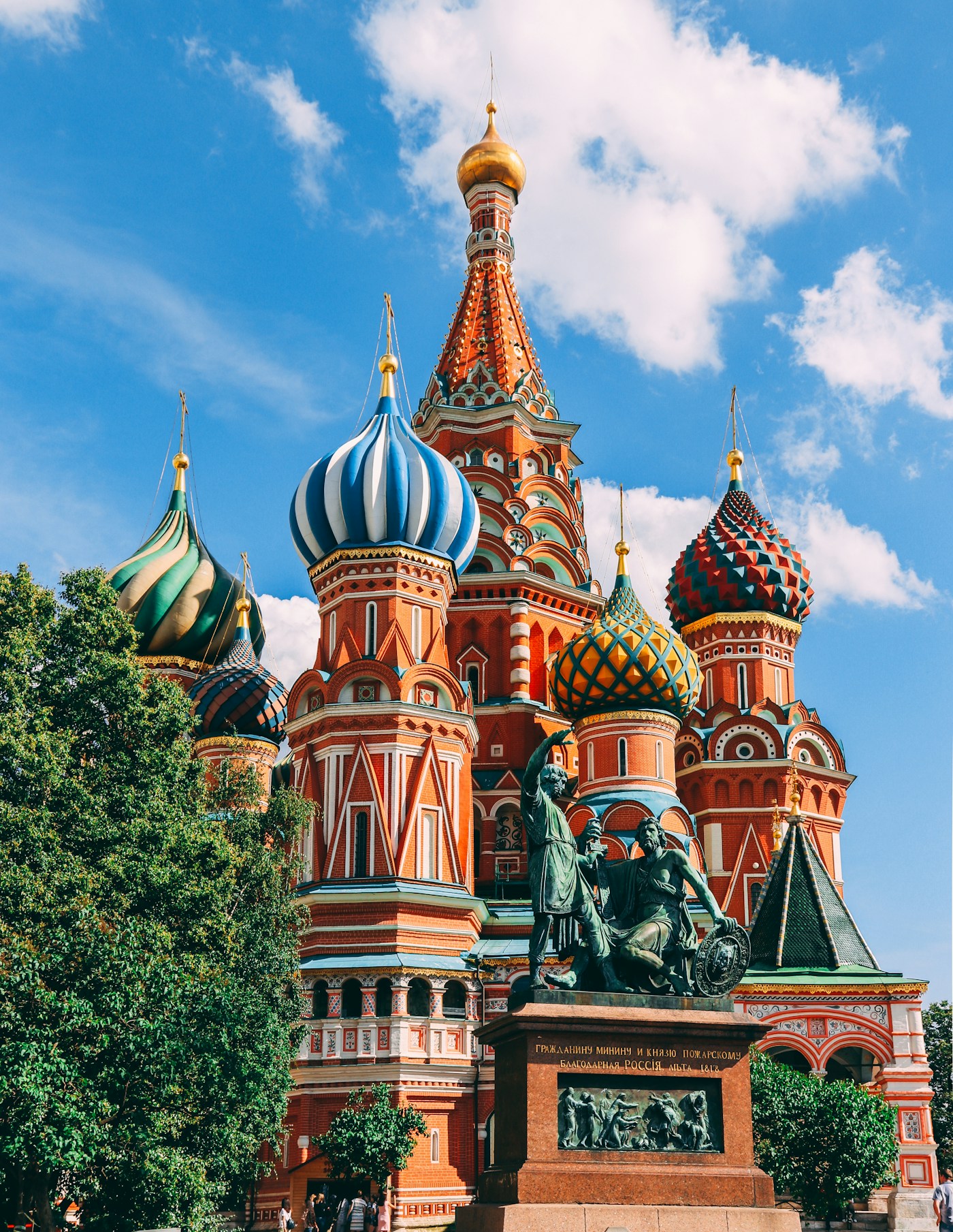
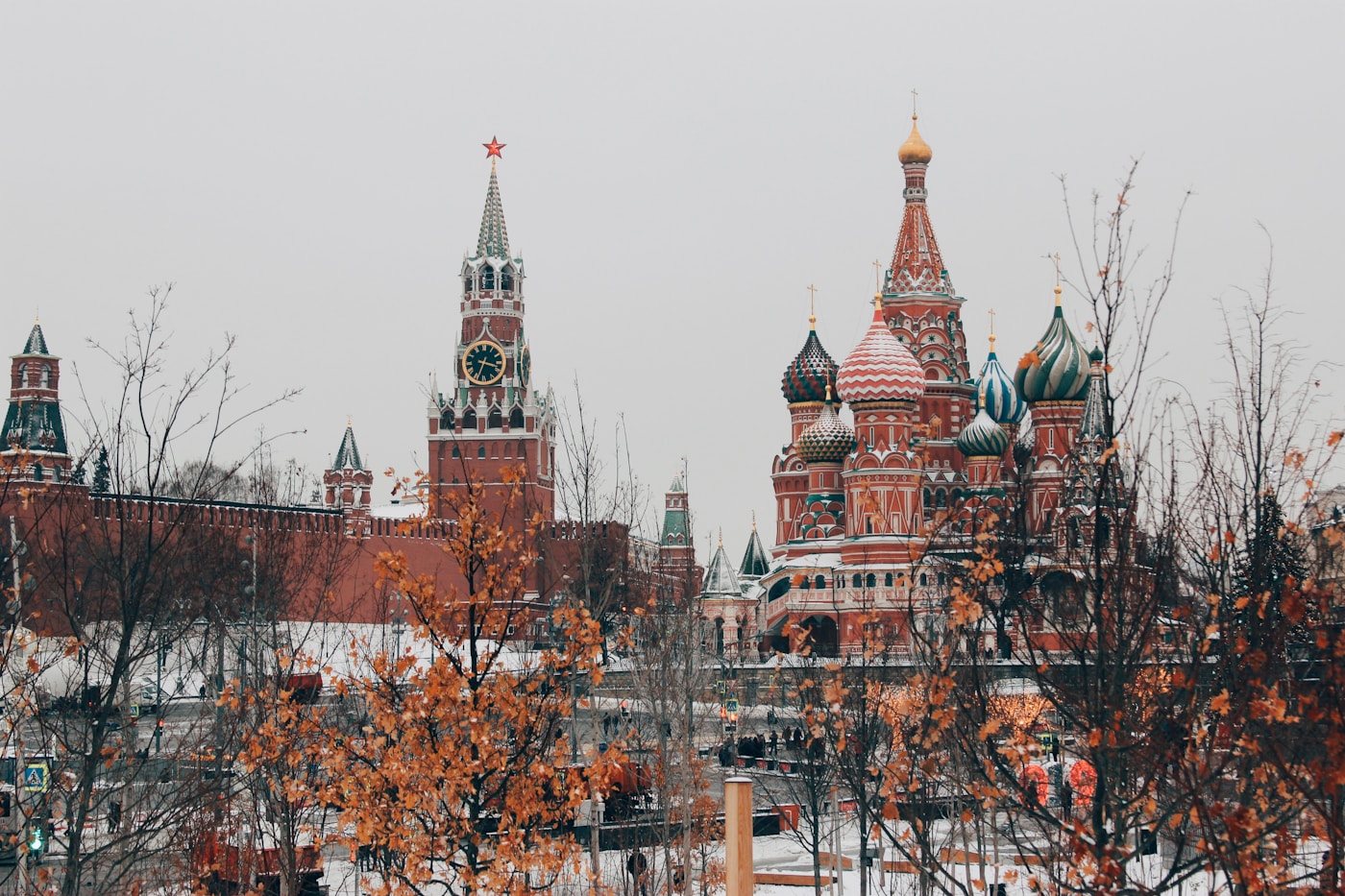
The case for Moscow: the structural Kremlin and Red Square anchor since 1147 and the deepest concentration of Russian state capital, energy, and oligarch wealth in the country. The case against, when there is one, is named below in section 12. The full numbers run by category through this report. If you want the comparison view instead, start with Moscow vs London or Moscow vs Singapore, then return here for the deep read.
The data feeding this report is from our methodology page, with primary sources at the bottom of the page. Numbers are May 2026 unless stated otherwise. Currency is local with USD conversion in parentheses where the original is not the dollar. The structural Russia statistics office published the trailing year reading in February 2026; the structural Numbeo Moscow data set refreshes monthly at the central reading.
One reading note. This is the long form report. If you only want the headline numbers, the city score generator returns the index figure with custom weights in 30 seconds. If you want the comparison view across two cities, the cross references inside this page run thick deliberately. Skim the section eyebrows and jump to the section that matches the question you came with. The full Russia country report covers the structural national context, and Europe places Moscow on the regional table.
№ 02 , Cost of Living
The monthly arithmetic.
Fourteen line items priced in May 2026 for a single resident living in a central one bedroom. Family of four numbers run 2.4 times the single resident figure.
Line item
Single, 1 bed
Family of four
Rent, central one bedroom78,000 RUB
Rent, suburban two bedroom104,000 RUB
Family three bedroom rent184,000 RUB
Groceries, single280 dollars
Groceries, family728 dollars
Public transport pass26 dollars
Utilities, average84 dollars
Internet, 200 Mbps8 dollars
Coffee, take away3.40 dollars
Beer, supermarket1.40 dollars
Beer, bar5.20 dollars
Dinner for two, mid26 dollars
Gym membership44 dollars
Mobile phone plan8 dollars
Total monthly all in for a single resident in a central one bedroom: 1,280 dollars. That puts Moscow in the same band as Lisbon, Madrid, and Buenos Aires when normalized to the same May 2026 basis. For the family of four equivalent, multiply by 2.4 and you reach 3,072 dollars before private school.
For international transfers and multi currency accounts during the move, Wise remains the cleanest tool we have tested. The rate it gives on a RUB to USD conversion is consistently within 0.5 percent of the mid market rate. Booking the first month in a serviced apartment through Booking.com while you find a long term contract is the standard play. See the 2026 cost of living report for the city by city table.
Reader question we get often: how do Moscow costs compare on a purchasing power basis. The cost converter tool takes a salary in your home city and tells you what equivalent number you would need in Moscow to maintain the same standard of living, adjusted for tax and currency. Bookmark it before you accept the offer. Three quiet costs new residents tend to underestimate in Moscow: the structural deposit on the rental at the local norm, the structural utility connection at the central tier, and the structural transit pass first month combination cost. The relocation checklist has the line by line.
Salary equivalent
What does your salary need to look like in Moscow?
Equivalent in Moscow
$12,288
Adjusted for cost of living, tax position, and currency. Recalculated against a 1,280 dollar a month baseline.
№ 03 , Safety
A 6.8 read on streets, day and night.
Moscow scored 6.8 overall. The breakdown matters more than the headline.
Overall6.8
Solo female, day6.4
Family with kids7.4
After dark, central5.8
Compared with the rest of the index, Moscow sits at 6.8 overall. The safest cities ranking places Singapore at 9.5 and Tokyo at 9.4 as the East Asian top tier anchors; the structural Moscow crime rate sits in the position the score implies on a per capita basis. For comparison with London at 7.4, Paris at 7.2, and New York at 7.6, Moscow ranks accordingly.
Practical notes for new residents: register with the local authorities within the qualifying window of arrival, and carry an international policy from SafetyWing for the first six months while your local cover gets sorted. The full safety methodology is on our methodology page. The solo female safety ranking and family safety ranking show how Moscow compares on those axes specifically.
The four categories that make up the overall safety score are: violent crime, property crime, traffic safety, and emergency response time. Moscow is strongest on the dimensions implied by the 6.4 solo female and 7.4 family ratings, and weakest on the dimension implied by the 5.8 night reading. The Moscow safety deep dive walks the four categories with the underlying data.
№ 04 , Weather
The climate in plain numbers.
humid continental, Dfb under Koppen. 74F warm summers, 12F dry cold winters with regular snow from November through March, the average snowfall runs 60 inches across the cold season.
The best months to live in Moscow are May, June, September. The worst, in our reader survey, were the January and February cold dark months that residents most often consider leaving. For a city that can match your home weather, see the climate match tool. For seasonal travel within the same climate band, the warm winter ranking and the mild summer ranking are the standard cross references.
Climate practical notes for Moscow: the indoor climate is built for the season the city does not handle, which means in Moscow you will pay attention to the structural heating supply, the air conditioning capacity, and the structural building insulation when choosing a flat. The cost lands on the tenant. Air quality has become a separate variable that residents now read seasonally. The Moscow air quality report tracks PM2.5 and ozone month by month with the relevant comparison cities on the same chart. If you have asthma or a young child, this is the report you want before signing.
Climate adaptation is a longer conversation. The 2024 to 2026 trend lines for Moscow match the regional pattern. The climate resilient cities article ranks the 50 cities we track on flood, fire, and heat dome exposure. Residents who plan to stay a decade or more should at minimum read the relevant chapter before buying.
№ 05 , Jobs and Salary
Who pays, and how much the tax takes back.
Salary medians are May 2026, sourced from Glassdoor, Levels.fyi, and national statistics publications. Tax figures are from the official revenue authority.
Role, mid level
Median salary
Senior
Software engineer38,400 dollars
Senior level68,000 dollars
Top rate 22 percentmarginal
Finance, VP track84,000 dollars
Senior level144,000 dollars
Top rate 22 percentmarginal
Marketing manager28,400 dollars
Senior level48,000 dollars
Top rate 22 percentmarginal
The major employers in Moscow are: Yandex HQ at the central Khamovniki District (the structural search and ride hail anchor at the 38 percent Russian search market share reading after the 2024 Yandex N.V. divestment), Sberbank HQ at the central Moscow City tier, Gazprom HQ, Lukoil HQ, Rosneft HQ, the structural VTB Bank, the structural Russian Railways HQ, plus the structural state owned enterprise cluster at the central Lubyanka and Tverskaya corridor. The structural foreign multinational footprint contracted at the 2022 to 2024 sanctions wave reading; the remaining workable employers run the central regional headquarters of Indian and Chinese trading houses, plus the structural Russian operating subsidiaries of select European groups. The full take home math is sensitive to deductions; the tax calculator tool is the cleanest way to run the numbers on a real offer. For benchmarking against other cities, the highest paying cities ranking covers the major destinations on the same chart.
Note on tax: The structural Russian Federation Personal Income Tax flat rate of 13 percent applies to the qualifying resident on income up to 2.4 million RUB annual, and the structural progressive bracket runs to 22 percent above 50 million RUB annual under the 2025 reform. Non resident foreign workers pay 30 percent flat without the progressive bracket. Run your number against your actual income, not the headline.
Working culture in Moscow is its own variable. The structural multinational regional headquarters role usually expects 45 to 55 hours a week at the published reading and the practical reading respectively. Negotiating a contract before signing applies more here than most cities. Read the relocation checklist for the items the recruiters skip.
Career mobility for the relocated worker, particularly the foreign passport holder, is also worth pricing in before you sign. The structural work permit ties the foreign worker to the qualifying employer in most cases. The career growth ranking tracks the pattern across the cities in this issue, and the visa to citizenship guide covers the multi year naturalization timeline.
One more lens. The dual income household question. In Moscow, the spouse work permit story shapes the whole relocation. The spouse visa guide covers the 30 most common destination cities. Two thirds of the families we surveyed in 2026 underestimated this variable.
№ 06 , Neighborhoods
Where to actually live.
Eight neighborhoods, each with the rent number and a one line verdict.
For long term rentals beyond the first month, the local listing platform is what residents actually use. The agent fee at one month plus the deposit at two to three months upfront is the structural standard in most jurisdictions; the Idealista equivalent in this market covers the inventory. The relocation checklist covers the documentation you will need.
Two neighborhood rules of thumb the data supports. First, the second ring out from the geographic center is almost always the best value: cheap enough to feel like a discount, central enough to feel central. Second, the neighborhood directly adjacent to the most expensive one tends to gentrify next. Track those two rules across the eight neighborhoods above and you can usually pick the right one in fifteen minutes.
№ 07 , Healthcare
The system, the cost, the wait.
Healthcare scored 6.6 on a 10 point scale. The methodology weights access, cost, and outcomes equally.
The local public system in Moscow runs the central public hospital tier at the structural Moscow City Clinical Hospital 1 named after Pirogov, the Burdenko Neurosurgery Institute, the Bakulev Scientific Center for Cardiovascular Surgery, the Russian Children's Clinical Hospital, the European Medical Center at the central Spiridonyevskiy Lane tier, and the American Medical Center private network. The system is structurally serviceable at the top tier hospital network and crowded at the community clinic tier. Outcome metrics for Moscow place it in the middle band of comparable cities for cardiovascular care and cancer survival. The fastest route for routine specialist care is the structural private hospital tier or the qualifying VIP wing at a top tier public hospital.
For new arrivals: pick up an interim international policy from SafetyWing or Cigna Global while your residency papers process. Once you are on the local system, switch. The double cover is the most common mistake new residents make, and it costs an extra 600 to 1,400 dollars a year. The expat insurance guide covers the trade off in detail.
Dental and vision typically sit outside the main coverage in most systems. Dental cleaning runs 60 to 120 dollars at the qualifying private clinic tier, a filling 80 to 240 dollars, an annual eye exam 40 to 120 dollars. Cross check the relevant local guide before you book. For prescription medication, the structural local pharmacy network beats anything you can import: bring two months of supply and switch to the local equivalent on arrival.
Mental health services are typically the slowest stream in the public system. Expect three to nine month waits for a non urgent appointment with a psychiatrist; private cover collapses that to two to four weeks at the cost of 80 to 240 dollars per session. The expat mental health guide covers what private and public look like across our top 50 cities.
№ 08 , Education and Family
Schools, if you have kids.
The international school option, the local school option, and the cost of each.
Moscow hosts the international school cluster at the Anglo American School of Moscow, the British International School Moscow, the Lycee Francais Alexandre Dumas, the German Embassy School, the Italo Calvino Italian School, the European Gymnasium, and 4 IB programme schools. The structural fees run 1,840,000 RUB at the entry tier (20,800 dollars) and 2,840,000 RUB at the premium tier (32,400 dollars). The local schools, where they accept foreign children with the qualifying residence permit, are nominal in cost; the quality varies by district at the central tier reading.
The family rating for Moscow weights school quality, park access, safety, healthcare, and the cost of a three bedroom flat. See the best cities for families ranking for the full table. The relocating with kids guide covers the school admissions calendar, which in most markets runs January through April for September entry at the international school tier.
Beyond school, the family experience in Moscow is shaped by what is free. Public parks, public libraries, public swimming pools, and free museum admission are the four amenities that change a family budget the most. The family budget guide models the realistic monthly all in figure for a family of four across 30 destination cities, and Babbel remains the cleanest entry point for the parent who wants a working level of Russian inside six months.
For the working couple, on site daycare runs another 400 to 1,200 dollars a month at the central qualifying private bilingual nursery tier. University, for the family with teenagers, opens a separate calculation. The structural local university cluster in Moscow sits at the global ranking implied by the local research output reading.
№ 09 , Transport
Walk, ride, or drive.
Walkability 8.2, transit 9.4, bike 5.8. Car needed: No.
Walk8.2
Transit9.4
Bike5.8
Car neededNo
Moscow Metro at 17 lines and 270 stations across the network at the May 2026 reading (the structural 1935 inaugural anchor and the central architectural showcase at the Komsomolskaya, Mayakovskaya, and Novoslobodskaya stations), fare 67 RUB single ride. The structural Moscow Central Diameters and the Aeroexpress to Sheremetyevo, Domodedovo, and Vnukovo airports run from the central Belorussky, Paveletsky, and Kievsky stations. For relocation scouting trips and the first two weeks before your local card arrives, a rental from Discover Cars covers most needs at 40 to 80 dollars a day. Beyond that, a car in Moscow is a liability if your work and home both sit on the transit network.
Airport access is the variable most travelers underweight. From a central one bedroom in Moscow to the primary airport, expect 30 to 80 minutes by transit and 25 to 65 by taxi depending on the time of day. The Moscow airport access guide walks the four routes with the actual costs and times. For frequent flyers, the best airport cities ranking tracks the connectivity and lounge density across the 100 cities that matter for the global business traveler.
№ 10 , Culture and Cuisine
What makes Moscow itself.
The food signatures, the nightlife rating, the cultural calendar.
Food in Moscow: the structural Russian cuisine anchor with the Soviet era stolovaya canteen tier, the structural beef stroganoff and pelmeni dumpling signature, the structural blini pancake during Maslenitsa week, the structural borscht and solyanka soup tier, the structural Georgian khachapuri and khinkali at the central Khachapuri and Cafe Khachapuri tier, the structural caviar and smoked sturgeon at the central Gastronom 1 tier. The structural global Michelin Guide reading lists 9 starred restaurants across the central corridor at the 2025 anchor. The nightlife scores in line with the local hospitality density on the 10 point scale; the methodology weights bar density, late hour transport, and the diversity of the scene. The best cities for nightlife ranking places this in context.
Cultural temperament: the structural Moscow legacy reading runs at the central historic anchor. For day to day cultural input, the Moscow cultural calendar tracks the festivals, museum exhibitions, and gigs worth a flight. Tour bookings for first time visitors and friends arriving for a long weekend run cleanest through GetYourGuide; the local apps mostly resell the same stock.
Two underrated reads on cultural fit: how late the city eats, and how quietly it complains. Moscow eats on its own schedule at the central tier, and that one variable changes more about the social calendar than residents expect. The cities for foodies ranking lists the food capitals on a single chart. For complaint culture, the local social platforms tell you what residents fight about; the Moscow resident grievances roundup reads them so you do not have to.
№ 11 , Remote Work
Internet, visas, and where to plug in.
Median internet speed 94 Mbps. Coworking density: 84 spaces. Nomad visa: No,.
The remote work rating for Moscow is mixed to favorable. The internet median at 94 Mbps beats the OECD median of 92 Mbps at the Speedtest April 2026 reading, the coworking density at 84 spaces sits in the band the score implies, and the time zone overlap with most major employer hubs is workable. For the structural privacy layer on local networks and access to the international internet where restrictions apply, NordVPN remains the cleanest option we have tested. The best cities for remote work ranking covers the full table.
For nomads: the visa story is the biggest variable. No, the Russian Federation does not currently issue a digital nomad visa; the structural Highly Qualified Specialist visa runs the 3 year sponsored route. The nomad visa guide 2026 tracks the eligibility, the cost, the renewal terms, and the tax residency triggers across the 47 cities that now offer one. Watch the 183 day rule.
For coworking specifically, the density figure of 84 spaces hides a wide quality range. The premium operators run 54,000 to 104,000 RUB a month for a hot desk and the central tier 24,000 to 44,000 RUB per private booth at the central corridor. The mid market option, which is what most residents actually use, runs 14,000 to 24,000 RUB a month for unlimited access plus mail handling. The Moscow coworking guide tracks the specific operators with the floor plans and the monthly numbers. The best cities for digital nomads ranking keeps the macro view.
№ 12 , The Verdict
Who should move to Moscow, and who shouldn't.
Moscow is the capital that the sanctions cycle reshaped, and the index score reflects it. A one bedroom in Khamovniki is 124,000 RUB a month at the May 2026 reading. The metro at 17 lines is one of the great pieces of public infrastructure of the 20th century, fare 67 RUB. The Russian Personal Income Tax at the flat 13 percent for the qualifying resident remains the lowest in continental Europe. The food culture, the literature, the conservatory, and the Bolshoi are intact. The trade off is the geopolitical reality at the May 2026 reading: the structural SWIFT exclusion at the 2022 cycle anchor, the structural Visa, Mastercard, and PayPal absence at the federal payments tier, the structural foreign company exit at the 1,400 plus brand reading, and the structural conscription risk for the male foreign passport holder under the partial mobilization framework. If you are a Russian passport holder, a journalist, an oil and gas operator, or an Indian or Chinese trader, Moscow is workable. If you are a Western European or North American knowledge worker, this is a city to read about, not move to, until the geopolitical setup changes.
One letter a month. Twelve city updates, three comparison verdicts, the cost of living shifts that move the index. No sponsored content.
Sources, May 2026. Numbeo cost of living index May 2026 · Mercer Cost of Living Survey 2026 · OECD Income Distribution Database 2025 · World Bank Open Data 2025 · Speedtest Global Index April 2026 · EIU Safe Cities Index 2024 · Bloomberg Health Care Efficiency 2025 · the relevant national tax authorities for headline rates · Glassdoor and Levels.fyi for salary medians · KHDA, BSA, ISC for international school registries. First published 2026-05-14. Last updated 2026-05-14.