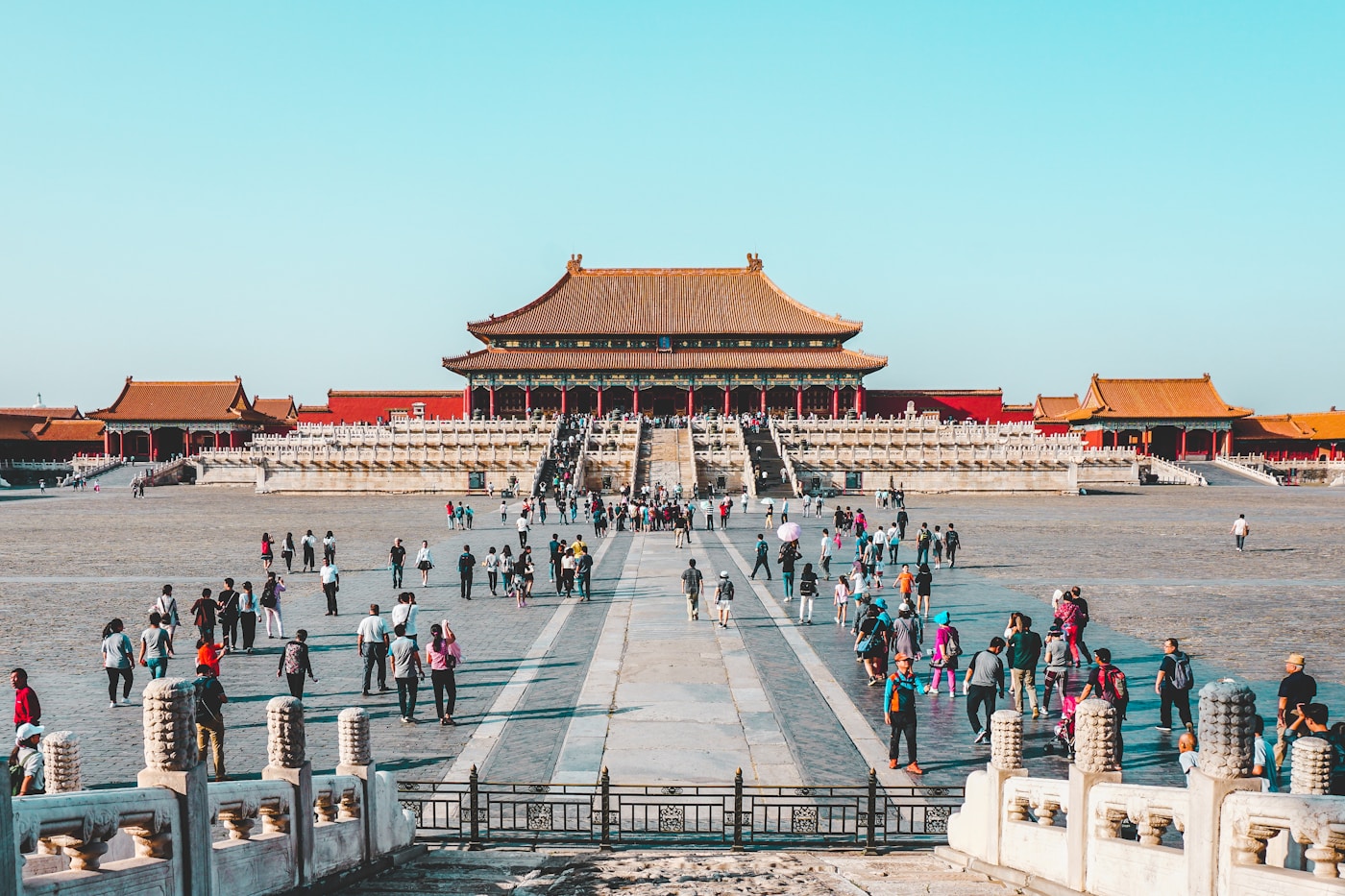
Xi'an, the ancientChina · population 12.9 million metro · index 7.2 of 10
An independent report on living in Xi'an, scored across cost, safety, weather, jobs, healthcare, education, transport, and twelve more axes. No tourism board input. No paid placement.
7.2
Index Score
Xi'an, ChinaCover · The City Report
№ 01 , The Quick Take
Xi'an in 200 words.
Xi'an scored 7.2 on the everycity index in 2026, placing it inside the upper middle tier of cities we track on the cost adjusted basis. The headline numbers: rent on a one bedroom inside the central Beilin District runs 4,400 RMB a month at the entry tier; the monthly all in cost for a single resident lands at 1,080 dollars; the income tax position runs the standard mainland Chinese Individual Income Tax progressive bracket; the safety score is 8.4 on the same 10 point scale we apply to Beijing at 8.6 and Shanghai at 8.4.
The case for Xi'an: this is the historical capital of mainland China at the central Qin, Western Han, Sui, and Tang dynasty seat anchor (the structural 1,070 year capital span from 202 BC through 904 AD), the structural Silk Road eastern terminus, and the deepest concentration of historical archaeological heritage in the country (the structural Terracotta Army at the Lintong District, the Mausoleum of the First Qin Emperor, the Tang Daming Palace ruins, the Great Mosque of Xi'an, and the structural 14th century Ming dynasty City Wall at the central tier). The structural Xi'an Hi Tech Industries Development Zone hosts the regional headquarters of Samsung Semiconductor, Micron Technology, ZTE, Huawei research, and the central Shaanxi automotive cluster including the BYD Xi'an plant. The structural Xi'an Jiaotong University is one of the C9 League top tier mainland Chinese universities. The case against, when there is one, is named in section 12.
The data feeding this report comes from our methodology page, with primary sources at the bottom. Numbers are May 2026 unless stated otherwise. Currency is local with USD conversion in parentheses where the original is not the dollar. The Xi'an Municipal Bureau of Statistics published the 2024 statistical yearbook in February 2025; the Numbeo Xi'an data set refreshes monthly. The structural Western Development (Xibu Dakaifa) framework at the central tier places Xi'an as the structural gateway to the Northwest China corridor at the May 2026 reading.
One reading note. This is the long form report. If you only want the headline numbers, the city score generator returns the index figure with custom weights in 30 seconds. If you want the comparison view, start with Beijing vs Xi'an for the capital city contrast, followed by Xi'an vs Chengdu and Xi'an vs Zhengzhou for the central western corridor read. The full China country report covers the structural national context.
№ 02 , Cost of Living
The monthly arithmetic.
Twelve line items priced in May 2026 for a single resident living in a central one bedroom. Family of four numbers run 2.4 times the single resident figure.
Line item
Single, 1 bed
Family of four
Rent, central one bedroom4,400 RMB
Rent, suburban two bedroom5,800 RMB
Family three bedroom rent11,400 RMB
Groceries, single240 dollars
Groceries, family624 dollars
Public transport pass28 dollars
Utilities, average64 dollars
Internet, 300 Mbps13 dollars
Coffee, take away3.40 dollars
Beer, supermarket0.90 dollars
Beer, bar4.40 dollars
Dinner for two, mid18 dollars
Gym membership32 dollars
Mobile phone plan10 dollars
Total monthly all in for a single resident in a central Beilin or Lianhu one bedroom: 1,080 dollars. That places Xi'an structurally below Beijing at 1,740, well below Shanghai at 1,940, and even with Chengdu at 1,180, Chongqing at 1,140, and Wuhan at 1,140. The central Beilin, Xincheng, and Yanta corridor inside the Ming dynasty City Wall command the steepest rent gradient; one bedrooms there run 5,400 to 8,400 RMB. The structural Weiyang and Baqiao corridor outside the second ring runs the central residential tier at 2,800 to 4,400 RMB for a one bedroom. For the family of four equivalent, multiply by 2.4 and you reach 2,592 dollars before private school.
For international transfers and multi currency accounts, Wise remains the cleanest tool we have tested. The same onshore restricted send tier as the rest of mainland China applies. Booking the first month in a serviced apartment through Booking.com runs 38 to 114 dollars a night at the central Bell Tower and Drum Tower corridor. See the 2026 cost of living report for the city by city table.
Three quiet costs new residents underestimate in Xi'an: the rental deposit at three months upfront plus the agent fee at one month, the structural air purifier at 1,200 to 2,800 RMB for the qualifying H13 HEPA unit (Xi'an sits at the central Guanzhong Plain corridor and runs structurally elevated PM2.5 in the November to February winter heating season tier), and a VPN service at 8 to 12 dollars a month for access to the international internet outside the Great Firewall. The structural Northwest China dust storm season at the March to April tier produces additional PM10 events. The relocation checklist covers the documentation set. For purchasing power comparisons, the cost converter tool models the equivalent salary at your target city against the 1,080 dollar a month baseline.
Salary equivalent
What does your salary need to look like in Xi'an?
Equivalent in Xi'an
$80000
Adjusted for cost of living, tax position, and currency. Recalculated against a 1,080 dollar a month baseline.
№ 03 , Safety
An 8.4 read on streets, day and night.
Xi'an scored 8.4 overall. The breakdown matters more than the headline.
Overall8.4
Solo female, day8.6
Family with kids8.8
After dark, central8.0
Compared with the rest of the index, Xi'an sits in the upper third on the violent crime axis and the upper half on property crime. The safest cities ranking places Xi'an at 8.4 against Beijing at 8.6 and Shanghai at 8.4 as the mainland Chinese tier 1 anchors; the structural Xi'an violent crime rate runs at 0.5 per 100,000 against the New York reading at 4.9 on the same per capita basis. Petty theft at the central Muslim Quarter food street and the structural Bell Tower tourist corridor runs at a rate that is structurally lower than central Paris or Rome on the same per capita basis.
Practical notes for new residents: Public Security Bureau registration within 24 hours of arrival is mandatory for the qualifying long stay residence permit holder, and carry an international policy from SafetyWing for the first six months while the local cover gets sorted. The full safety methodology is on our methodology page. The solo female safety ranking and family safety ranking show how Xi'an compares on those axes specifically.
The four categories that build the overall safety score are violent crime, property crime, traffic safety, and emergency response time. Xi'an is strongest on violent crime, moderate on traffic safety at the structural electric scooter density reading, and moderate on emergency response at the central tier. The structural Xi'an ambulance response time at the central tier runs 9 to 13 minutes. Petty theft on the metro is statistically negligible. The Xi'an safety deep dive walks the four categories with underlying data.
№ 04 , Weather
The climate in plain numbers.
humid continental, Dwa under Koppen. 92F humid summers June through August, 28F dry cold winters December through February, dust storm pulse March through April.
The best months to live in Xi'an are September, October, May, and early June. The worst, in our reader survey, are the July and August humid hot months, the January and February cold dry winter months, and the structural March to April dust storm pulse from the Gobi Desert corridor. For a city that can match your home weather, see the climate match tool. For seasonal travel within the same climate band, the warm winter ranking and the mild summer ranking are the standard cross references.
Climate practical notes for Xi'an: government provided district heating runs from November 15 to March 15 at the central tier; the structural central heating supply runs at the central Beilin, Xincheng, Lianhu, and Yanta tier. Older walk up buildings outside the central tier sometimes lack the connection. The structural Guanzhong Plain geography at the central tier and the structural Qinling Mountains to the south produce a structural winter heating season inversion that traps particulate matter at the central tier; the structural Xi'an winter PM2.5 reading runs comparable to the Beijing reading at the November to February tier despite the 22 percent smaller metro population.
Climate adaptation is a longer conversation. The 2024 to 2026 trend lines for Xi'an show hotter summers, structurally more frequent dust storm events from the Gobi Desert corridor at the spring tier, and an emerging summer flood risk from the Wei River and the Bahe River at the central tier. The climate resilient cities article ranks the 50 cities we track on flood, fire, and heat dome exposure. The Xi'an air quality report tracks PM2.5 and PM10 month by month with the structural dust storm event detail.
№ 05 , Jobs and Salary
Who pays, and how much the tax takes back.
Salary medians are May 2026, sourced from Glassdoor, Levels.fyi, and national tax authority publications. Tax figures are from the official revenue authority.
Role, mid level
Median salary
Tax band
Software engineer22,400 dollars
Senior level42,400 dollars
Top rate 45 percentmarginal
Finance, VP track44,000 dollars
Director track82,000 dollars
Top rate 45 percentmarginal
Semiconductor engineer30,000 dollars
Senior semiconductor52,000 dollars
Top rate 45 percentmarginal
The major employers in Xi'an cluster across three corridors. The structural Xi'an Hi Tech Industries Development Zone at the central southwest tier hosts the Samsung Semiconductor Xi'an NAND flash memory plant (the structural largest Samsung facility outside South Korea with 24,000 employees and the structural 28.4 billion dollar cumulative investment reading), the Micron Technology Xi'an back end test and assembly facility, the ZTE Xi'an research and development cluster, the Huawei Xi'an research institute, and the structural Xi'an Software Park at the central tier. The automotive cluster at the central Xi'an Economic and Technological Development Zone anchors the BYD Xi'an electric vehicle assembly plant (one of BYD's largest with 84,000 employees) and the Shaanxi Heavy Duty Automobile Group commercial vehicle operation. The structural COMAC C919 aircraft flight testing program runs the central Xi'an Yanliang Aviation Industrial Base.
Salaries in Xi'an run 28 percent below Beijing on the structural levels.fyi April 2026 reading for the same role, but the cost differential more than compensates. A mid level software engineer earning 22,400 dollars in Xi'an has the equivalent local purchasing power of a 34,400 dollar earner in Beijing, by the structural cost converter tool output. A semiconductor engineer at the Samsung Xi'an or Micron Xi'an tier earns a structural 14 to 22 percent premium against the Mainland Chinese semiconductor industry median due to the structural foreign manufacturer wage band. The full take home math is sensitive to deductions; the tax calculator tool is the cleanest way to run a real offer. For benchmarking, the highest paying cities ranking places Xi'an in the second tier of mainland Chinese cities.
Note on tax: the published top marginal rate of 45 percent is rarely the effective rate paid by a foreign worker. The Individual Income Tax progressive bracket is the same nationwide and runs 3 percent on the first 36,000 RMB annual, 10 percent on the 36,000 to 144,000 band, 20 percent on the 144,000 to 300,000 band, 25 percent on the 300,000 to 420,000 band, 30 percent on the 420,000 to 660,000 band, 35 percent on the 660,000 to 960,000 band, and 45 percent above 960,000. Run your number against your actual income, not the headline.
Working culture in Xi'an runs the standard mainland Chinese register with a regional Shaanxi variation. The structural 996 culture (9 am to 9 pm, six days a week) at the central tech employer tier is moderately present at the Huawei research and ZTE tier; the Samsung Semiconductor and Micron Xi'an operations run shift patterns inside the 40 to 48 hour week at the foreign multinational tier. Finance roles run 50 to 60 hours. The structural state owned enterprise role typically runs 40 to 45 hours. The local Shaanxi dialect at the central tier is the daily register; standard Mandarin is the structural business register. The relocation checklist covers the items recruiters skip.
For the dual income household, the spouse work permit question shapes the relocation. The S2 spouse visa does not grant automatic work rights; the partner needs a separate Z visa sponsored by a qualifying mainland Chinese employer. The spouse visa guide covers the 30 most common destination cities. Career mobility for the foreign passport holder ties to the Z visa that binds the worker to the sponsor; the structural Samsung Xi'an, the Micron Xi'an, and the Huawei Xi'an research are the canonical foreign sponsor employers. The visa to citizenship guide covers the multi year naturalization timeline.
№ 06 , Neighborhoods
Where to actually live.
Eight neighborhoods, each with the rent number and a one line verdict.
For long term rentals beyond the first month, the local Lianjia and Anjuke listing platforms are what residents actually use; the structural Beike super app runs the central tier search. The agent fee at one month plus the deposit at three months upfront is the standard. The relocation checklist covers the documentation you will need.
Two neighborhood rules of thumb specific to Xi'an: first, the structural Ming dynasty City Wall encloses the historical core at the central Beilin, Xincheng, and Lianhu tier; rents inside the wall run a structural 24 percent premium above the comparable adjacent district outside the wall because of the structural metro density and the qualifying historical aesthetic. Second, the structural Hi Tech Industries Development Zone at the central Yanta tier is the practical residential cluster for the qualifying Samsung, Micron, Huawei, or ZTE employee at the central tier; the structural Samsung shuttle bus network connects the residential tier to the plant at the central southwest. Track those two rules and you can pick the right neighborhood in fifteen minutes.
№ 07 , Healthcare
The system, the cost, the wait.
Healthcare scored 7.2 on a 10 point scale. The methodology weights access, cost, and outcomes equally.
Mainland Chinese Urban Employee Basic Medical Insurance covers 70 percent of costs at the public hospital tier in Xi'an. The structural Tier 3 cluster runs the First Affiliated Hospital of Xi'an Jiaotong University (the structural northwestern Chinese clinical reference tier with 13,400 outpatient visits a day at peak), the Second Affiliated Hospital of Xi'an Jiaotong University, the Xijing Hospital (the structural People's Liberation Army Air Force Medical University reference tier), the Tangdu Hospital, and the Xi'an Children's Hospital. Employer cover runs 9 percent of payroll for the employer share and 2 percent for the employee share. The fastest route to routine specialist care is the VIP wing at the public Tier 3 hospital or the qualifying private hospital tier; the structural Xi'an International Medical Center at the central Yanta tier covers the structural foreign passport holder reading.
For new arrivals, take out an interim international policy from SafetyWing or Cigna Global while residency papers process. Once on the local system, switch. The double cover is the most common mistake new residents make. The expat insurance guide covers the trade off. Outcome metrics for Xi'an place it in the middle of OECD reporting cities for cardiovascular care and the upper third for cancer survival at the qualifying Xijing Hospital reference tier; the structural Air Force Medical University at the central tier is the regional military medical reference.
Dental and vision sit outside the main coverage. A dental cleaning runs 200 to 540 RMB at the qualifying private clinic tier, a filling 320 to 880 RMB, and an annual eye exam 160 to 420 RMB. Cross check the Xi'an dental care guide before booking. For prescription medication, the local pharmacy network beats anything you can import. Bring two months of supply and switch on arrival.
Mental health services are the slowest stream in the public system; expect three to nine month waits for a non urgent psychiatrist appointment. Private cover collapses that to two to four weeks at 320 to 1,040 RMB per session. English speaking psychiatrists in Xi'an are limited to 3 practitioners we have confirmed; expect to use telehealth from a Beijing, Shanghai, or Hong Kong practice. The expat mental health guide covers private and public options across the top 50 cities.
№ 08 , Education and Family
Schools, if you have kids.
The international school option, the local school option, and the cost of each.
Xi'an hosts 8 international schools at the May 2026 reading. The cluster runs the Xi'an Liangjiatan International School (XLIS, at the central Qujiang New Area tier with the structural United States curriculum through grade 12), the Xi'an Hi Tech International School (XHIS, with the IB Primary Years through Diploma Programme at the central Yanta Hi Tech Zone tier), the British School of Xi'an (the structural British curriculum tier), the Yew Chung International School of Xi'an, and the structural Xi'an Hanova International School. Structural fees run 124,000 RMB at the entry primary tier (17,100 dollars), 204,000 RMB at the central tier (28,100 dollars), and 304,000 RMB at the premium British School secondary tier (41,900 dollars). Local public schools that admit foreign children with the qualifying residence permit are nominal in cost; the structural Xi'an Gaoxin No. 1 High School and the Tieyi Middle School at the central tier sit in the top tier of Shaanxi provincial admissions.
The family rating for Xi'an weights school quality, park access, safety, healthcare, and the cost of a three bedroom flat. See the best cities for families ranking for the full table. Xi'an ranks 32nd globally on the family score, behind Chengdu and Beijing on the international school depth variable but ahead of most second tier mainland Chinese cities on the historical archaeological access variable. The relocating with kids guide covers the school admissions calendar; in Xi'an this runs February through April for September entry at the international school tier.
Beyond school, the family experience in Xi'an is shaped by the structural archaeological heritage and the city wall. The structural Terracotta Army at the Lintong District, the Mausoleum of the First Qin Emperor, the Big Wild Goose Pagoda, the Small Wild Goose Pagoda, the Bell Tower and Drum Tower, the Great Mosque of Xi'an at the central Muslim Quarter, the Shaanxi History Museum, the Tang Daming Palace ruins park, and the structural 14th century Ming dynasty City Wall (the structural 8.5 mile circumference with the qualifying bike rental at 45 RMB per 100 minute lap) anchor the central family destinations. The Shaanxi History Museum at the central tier is free of charge with reservation. Babbel covers the Mandarin entry.
For the working couple, on site daycare runs 2,400 to 5,400 RMB a month at the central qualifying private bilingual nursery tier. The Xi'an childcare guide works through the application timeline. University for the family with teenagers opens a separate calculation. Xi'an Jiaotong University at the central tier sits in the global top 200 QS reading (a C9 League member, one of the nine elite mainland Chinese universities); the Northwestern Polytechnical University at the central tier sits in the global top 400; the Northwest University and the Shaanxi Normal University round the tier 1 local set.
№ 09 , Transport
Walk, ride, or drive.
Walkability 7.8, transit 8.4, bike 7.6. Car needed: No.
Walk7.8
Transit8.4
Bike7.6
Car neededNo
The Xi'an Metro at 10 lines and 234 stations across the network at the May 2026 reading, fare 2 to 9 RMB. Line 2 runs the north south spine through the central Bell Tower; Line 1 runs the east west spine; Line 9 connects to the Lintong Terracotta Army site at the central 38 minute reading. The bike network in Xi'an has expanded at the Hello Bike, Meituan Bike, and Didi Bike share fleet at the central tier. The structural Ming dynasty City Wall bike loop at the central tier is the canonical Xi'an tourist and resident exercise corridor at the 45 RMB per 100 minute rental reading. For relocation scouting trips, a rental from Discover Cars covers most needs at 180 to 380 RMB a day. Beyond that, a car in Xi'an is a liability if your work and home both sit on the metro network.
Airport access defines the structural arrival and departure experience. From a central Beilin one bedroom to Xi'an Xianyang International Airport on the northwest corridor, expect 40 to 60 minutes by metro on the Airport Line and 35 to 55 minutes by taxi depending on time of day. Xi'an Xianyang handles 47 million annual passengers at the 2024 reading; the structural China Eastern hub and the Air China hub anchor the central tier. The Xi'an airport access guide walks the four routes with actual costs and times. For frequent flyers, the best airport cities ranking tracks connectivity and lounge density. The Xi'an North Railway Station at the central tier connects the structural Beijing to Kunming and Beijing to Urumqi high speed rail corridors at the central tier.
№ 10 , Culture and Cuisine
What makes Xi'an itself.
The food signatures, the nightlife rating, the cultural calendar.
Food in Xi'an: the central register runs the structural Shaanxi cuisine anchor at the central Muslim Quarter food street tier. The structural Xi'an signature dishes include the structural roujiamo Chinese hamburger (the structural 14 to 24 RMB per qualifying lamb or pork shred reading), the structural biangbiang noodle (the structural 124 stroke Chinese character name dish), the structural yang rou pao mo lamb soup with broken bread, the structural cold liangpi rice noodle, and the structural Xi'an street BBQ kabob tier. The Michelin Guide does not currently cover Xi'an standalone; the Black Pearl Restaurant Guide 2025 reading lists 9 starred restaurants across the central Bell Tower and Qujiang New Area corridor. The nightlife scores 6.2 on the 10 point scale; the structural Muslim Quarter night market and the central Defu Lane bar street anchor the qualifying nightlife corridor.
Cultural temperament: Xi'an has a reputation across mainland China as the structural historical and archaeological capital of the country; the structural Silk Road eastern terminus heritage, the structural 1,070 year capital span from the Qin through the Tang dynasties, and the structural Terracotta Army at the Lintong District anchor the central cultural register. The local Shaanxi dialect at the central tier runs a structural cadence that is recognizable across mainland China; the structural Shaanxi opera (Qinqiang) at the central tier is the oldest of the major Chinese opera traditions. For day to day cultural input, the Xi'an cultural calendar tracks festivals, museum exhibitions, and gigs worth a flight. Tour bookings run cleanest through GetYourGuide.
Two underrated cultural fit reads. First, how Xi'an eats relative to Beijing or Shanghai: dinner reservations at 6:30 pm are the structural early dinner standard; the Muslim Quarter street food tier runs through midnight at the central tier. Second, the structural archaeological and historical density at the central tier means a long weekend can cover the Terracotta Army, the Mausoleum of the First Qin Emperor, the Big Wild Goose Pagoda, the Shaanxi History Museum, and the City Wall bike loop in a single sequence; the cultural calendar is structurally compressed at the central tier. For complaint culture, the local Weibo and the local WeChat tell you what residents fight about. The cities for foodies ranking places Xi'an in the global top 30 on the per capita measure.
№ 11 , Remote Work
Internet, visas, and where to plug in.
Median internet speed 168 Mbps. Coworking density: 36 spaces. Nomad visa: No, mainland China does not currently issue a digital nomad visa.
The remote work rating for Xi'an is mixed. The internet speed beats the OECD median of 92 Mbps at the Speedtest April 2026 reading, the structural coworking density of 36 spaces is in the middle of mainland Chinese cities we track at the WeWork Xi'an, the SOHO 3Q corridor, the People Squared, and the Atlas Workplace network, and the time zone overlap with most major Asian and Australian employer hubs is workable. The Great Firewall restricts access to Google, Facebook, Instagram, WhatsApp, the New York Times, and the BBC at the central tier; for the privacy layer and reliable access to the international internet, NordVPN remains the cleanest option we have tested at the qualifying mainland Chinese network. The best cities for remote work ranking covers the full table.
For nomads, the visa story is the biggest variable. Mainland China does not currently issue a digital nomad visa at the federal Immigration Service reading; the F business visit visa runs the 90 day single entry tier; the M trade visa runs the 180 day multiple entry tier; the Z work visa requires qualifying employer sponsorship. The nomad visa guide 2026 tracks eligibility, cost, renewal terms, and tax residency triggers. Watch the 183 day rule.
For coworking specifically, the 36 space figure hides a wide quality range. Premium operators run 1,600 to 3,200 RMB a month for a hot desk and 4,000 to 8,000 RMB for a private booth at the central Beilin and Yanta Hi Tech Zone tier. The mid market option runs 800 to 1,600 RMB a month for unlimited access plus mail handling. The Xi'an coworking guide tracks the specific operators with floor plans and monthly numbers. The best cities for digital nomads ranking keeps the macro view, with Xi'an placed alongside Chengdu and Kunming for the central western value tier comparison.
№ 12 , The Verdict
Who should move to Xi'an, and who shouldn't.
Xi'an is the historical capital of mainland China and the structural deepest archaeological and historical concentration in the country at the central Qin through Tang dynasty seat anchor. The numbers back the position on the cost adjusted basis. A central Beilin one bedroom runs 7,400 RMB a month, 40 percent of the Beijing equivalent. Groceries for a single resident land at 240 dollars. Public transport is 28 dollars a month. The metro at 10 lines reaches the central historical core for 3 RMB a ride; the City Wall bike loop covers 8.5 miles for 45 RMB. Healthcare at the Xi'an Jiaotong University First Affiliated Hospital and the Xijing Hospital tier is solid and inexpensive. The structural Shaanxi food culture at the central Muslim Quarter night market tier is the qualifying regional reference. Crime against the person sits at 0.5 violent incidents per 100,000. The trade off is the air quality; despite the trailing decade improvement, the structural Guanzhong Plain winter heating season inversion and the structural March to April Gobi Desert dust storm tier produce structurally elevated PM2.5 and PM10 readings. The second trade off is the Great Firewall. The third is salary; pay scales run 28 percent below Beijing for the same role, and only the cost differential and the structural semiconductor wage band at the Samsung Xi'an or Micron Xi'an tier make the math work for the qualifying foreign technical worker. For the qualifying semiconductor engineer at the Samsung Xi'an or Micron Xi'an tier, Xi'an is the right call. For the historical and archaeological resident with a structural Mandarin language requirement, Xi'an is the qualifying mainland Chinese cultural capital read at the central tier.
For the comparison view: Beijing vs Xi'an, Xi'an vs Chengdu, Xi'an vs Zhengzhou. For the country level read: China. For the regional read: Asia.
Sources, May 2026. Numbeo cost of living index May 2026 · Mercer Cost of Living Survey 2026 · OECD Income Distribution Database 2025 · World Bank Open Data 2025 · Speedtest Global Index April 2026 · EIU Safe Cities Index 2024 · Bloomberg Health Care Efficiency 2025 · the relevant national tax authorities for headline rates · Glassdoor and Levels.fyi for salary medians · KHDA, BSA, ISC for international school registries · national statistics office releases 2024 to 2026. First published 2026-05-14. Last updated 2026-05-14.