№ 00 , The Comparisons
Melbourne vs Perth
Same country, same tax, two opposite trades. Perth sells sunshine and a 7 percent lower cost. Melbourne sells the broader economy and the trams to move across it.
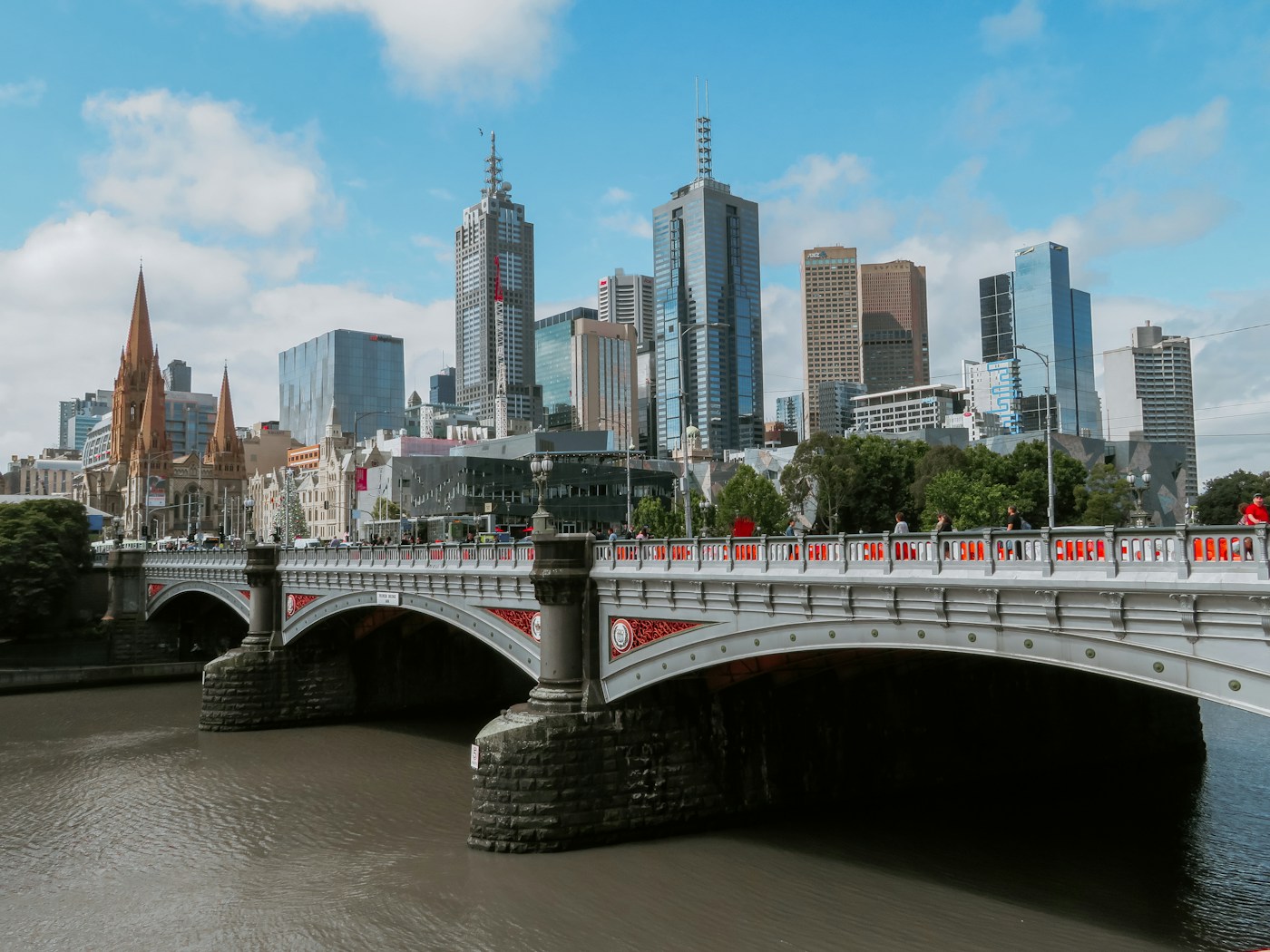
Melbourne

Perth
Same country, same tax, two opposite trades. Perth sells sunshine and a 7 percent lower cost. Melbourne sells the broader economy and the trams to move across it.
Melbourne wins for the career generalist: the economy is the most diversified in Australia, spanning finance, technology, education, and health, the public transport is the best in the country, and the cultural depth has no domestic rival. Perth wins for the sun seeker and the resources worker: it posts a weather score of 8.4 against Melbourne 6.6, an all in cost 7 percent lower at 3,200 Australian dollars a month against 3,450, and salaries lifted by the mining sector that anchors the Western Australian economy.
The two cities sit at opposite ends of the continent and at opposite ends of a single trade. Melbourne offers more to do, more ways to earn, and more ways to move across the city without a car. Perth offers more sun, more space, more beach, and a slightly cheaper month, at the cost of isolation: it is the most remote major city on earth, 2,100 kilometers from the next capital.
We score Melbourne 7.7 overall and Perth 7.6. This is the closest comparison in the series, and it should be, because the two cities share a country, a currency, and a tax code. The 0.1 gap is economic breadth and transport against climate and cost, and which way it tips for you depends almost entirely on whether you prize a career market or a lifestyle.
| Index, out of 10 | Melbourne | Perth |
|---|---|---|
| Cost efficiency | 6.4 | 6.8 |
| Safety | 7.0 | 7.4 |
| Weather | 6.6 | 8.4 |
| Jobs and salary | 8.2 | 7.8 |
| Public transport | 8.0 | 6.4 |
| Overall index | 7.7 | 7.6 |
Perth is cheaper on eight of the twelve items below, level on two, and dearer on two. Rent is the swing: a one bedroom in central Perth runs 2,100 Australian dollars against 2,300 in Melbourne, a gap that widened then narrowed as a mining driven boom pushed Perth rents up sharply through 2023 and 2024 before supply caught part of it. Where Perth costs more is the predictable pair: utilities at 240 dollars against 210, because the long hot summers run the air conditioning, and beer at 13 dollars against 12, because remoteness taxes everything trucked in.
| Monthly line item | Melbourne | Perth |
|---|---|---|
| Rent, one bedroom in the center | A$2,300 | A$2,100 |
| Rent, one bedroom outside the center | A$1,750 | A$1,600 |
| Monthly transit pass | A$190 | A$170 |
| Groceries, one person, monthly | A$480 | A$460 |
| Meal, inexpensive restaurant | A$25 | A$25 |
| Dinner for two, mid range | A$120 | A$115 |
| Pint of beer | A$12 | A$13 |
| Utilities, monthly | A$210 | A$240 |
| Internet, 100 Mbps | A$80 | A$85 |
| Fitness club, monthly | A$70 | A$70 |
| Coworking desk, monthly | A$350 | A$320 |
| All in, single person | A$3,450 | A$3,200 |
The all in line lands at 3,450 dollars a month in Melbourne and 3,200 in Perth, a 7 percent difference that is real but modest. This is not the 52 percent chasm of a Berlin against a Warsaw; these are two cities in the same wealthy country with similar price levels. The cost question here is a tiebreaker, not a decider, and it leans gently to Perth. The cost of living calculator will hold a salary constant and convert the spending power between the two, and the Sydney cost of living report sets the national benchmark both undercut.
On savings the picture follows income. A Perth resident on the higher resources sector pay with the lower cost base banks the most of any profile in this comparison. A Melbourne worker on a diversified salary saves less per month but trades that for a job market that does not rise and fall with one commodity cycle. The cost line favors Perth; the income stability line favors Melbourne, and a careful mover weighs both rather than the monthly figure alone.
Perth scores 7.4 on safety and Melbourne 7.0, both comfortably in the amber band and both safe by global standards. Perth is the quieter city, smaller at 2.1 million against Melbourne 5.1 million, with less of the late night friction that any larger metropolis carries. Melbourne is safe across most of its sprawl, with the usual caveats for a few inner suburbs after dark and the property crime rate that tracks any city of its size.
For families and solo movers the practical read is reassuring in both. Violent crime is low by international comparison, the public spaces are well used and well lit, and the gap between the two scores is small enough that safety should not be the deciding axis. Readers weighing this against the wider field can see the safest cities ranking, where both Australian cities sit in the upper half of the global table.
Perth scores 8.4 on weather against Melbourne 6.6, the widest gap on any axis here, and it earns it. Perth is the sunniest capital in Australia, logging more than 3,200 hours of sunshine a year under a Mediterranean climate: hot dry summers, mild wet winters, and a reliability that lets you plan an outdoor life. The afternoon sea breeze known locally as the Fremantle Doctor cools the summer heat almost on schedule.
Melbourne is the opposite of reliable. Its reputation for four seasons in one day is earned: a single afternoon can swing 15 degrees, summers deliver both 40 degree heat and cool changes, and the cloud and drizzle of a Melbourne winter wear on people who arrived for sun. The trade is that Melbourne never bakes the way Perth does in February. If climate sits high on your list, this section alone may settle the comparison, and the cities with the best weather ranking explains why Perth places and Melbourne does not.
The seasonal practicalities differ as much as the scores. A Perth life runs on the water from October to April, with long warm evenings and a beach culture that holds most of the year. A Melbourne life leans on its indoor strengths through a gray winter and bursts outdoors when the weather allows, which makes the laneways, the galleries, and the rooms full of live music feel less like options and more like necessities. Neither pattern is wrong, but they suit different people, and the honest question is whether you would rather plan an outdoor life with confidence or accept a city that keeps you occupied when the sky does not cooperate.
Melbourne scores 8.2 on jobs against Perth 7.8, and the gap is one of diversity rather than pay. Melbourne is the corporate and cultural capital of southeastern Australia, home to major banks, a deep technology and startup base, four large universities, and a health and research sector of national scale. The median full time salary is 95,000 Australian dollars, and the range of employers means a worker can change jobs without leaving the city.
Perth runs hotter on average pay and narrower on type. The Western Australian economy is anchored by mining and resources, and the salaries reflect it: engineers, geologists, and fly in fly out workers on the iron ore and gas projects can clear 120,000 to 180,000 dollars, lifting the Perth median full time figure to 98,000, above Melbourne. The risk is concentration. When the commodity cycle turns, Perth feels it across the whole economy in a way that Melbourne diversified base does not.
The one line that does not move is tax. Both cities are in Australia, which levies income tax federally with no state income tax, so a worker on the same salary pays the same rate in Perth as in Melbourne, running through brackets of 16, 30, 37, and 45 percent after the 2024 cuts. That removes the tax variable that decides most comparisons in this series and throws the jobs question back onto breadth against the mining premium. The best cities for jobs ranking places both in the strong tier.
Melbourne is the cultural capital of Australia by common consent. It built its identity on coffee, on the laneway bars and the live music rooms, on a sporting calendar that runs from the Australian Open to the Melbourne Cup to a football code the city treats as religion, and on a dining scene that spans every cuisine the country migration has carried in. The life is urban, dense, and indoors as often as out, which suits the unreliable weather.
Perth lives outdoors. Its strengths are the beaches that run for kilometers along the Indian Ocean, the Swan River that threads the city, Rottnest Island a ferry ride offshore, and a Mediterranean rhythm that pushes life onto the sand and the water. The cultural scene is smaller and the isolation is real, but for anyone whose ideal weekend is a beach and a barbecue rather than a gallery and a bar, Perth delivers what Melbourne cannot. For depth Melbourne wins; for the outdoor life Perth does.
Readers comparing the wider field should see Brisbane vs Melbourne, Melbourne vs Sydney, and Brisbane vs Perth, which test the same lifestyle against economy trade across the other Australian capitals.
Migration is mostly the same and partly not. Both cities sit inside the Australian skilled migration system, reached through the points tested subclass 189, the state nominated 190, or the employer sponsored 482. The difference is that Western Australia, and therefore Perth, carries designated regional status for parts of the skilled program, opening the subclass 491 regional pathway and state nomination streams that can be easier to win than the equivalent in Melbourne. For a migrant chasing a visa rather than a postcode, Perth can be the faster door into the country.
Transport is the clean Melbourne win. Melbourne scores 8.0 on the strength of the largest tram network in the world, a suburban rail system, and a bus web that together let most residents live without a car. Perth scores 6.4: the Transperth trains and buses are clean and the free central area transit buses help, but the city is built for the car, spread thin along the coast, and a resident without one feels the distance. In Melbourne you can choose not to drive; in Perth most people choose to.
Choose Melbourne if you want the broadest job market in Australia, the cultural depth of its galleries, music, sport, and food, and the only Australian city where you can comfortably live without a car, and if you can accept unreliable weather and a 7 percent higher cost. Choose Perth if you want the sunniest capital in the country at a weather score of 8.4, a slightly cheaper month, beaches at the end of the street, resources sector pay, and an easier skilled migration pathway, accepting isolation and a car dependent layout in return.
Our verdict leans Melbourne by the narrowest margin in the series, 7.7 to 7.6, on economic breadth and transport. But that margin is so thin that lifestyle should break the tie: if sun and the outdoor life sit at the top of your list, Perth is the clear answer despite the overall score, and if career options and a city you can move across without a car matter more, Melbourne is. Run both through the relocation score tool, then read the full Melbourne city profile and Perth city profile. Because the two share a country and a tax code, this is the rare comparison where you can move for the lifestyle alone without sacrificing much on the economic side, and that freedom is exactly what makes the decision feel so close. Weigh sun and space against jobs and trams, decide which of the two lists is longer for you in plain terms, and the right city tends to name itself without much further argument.