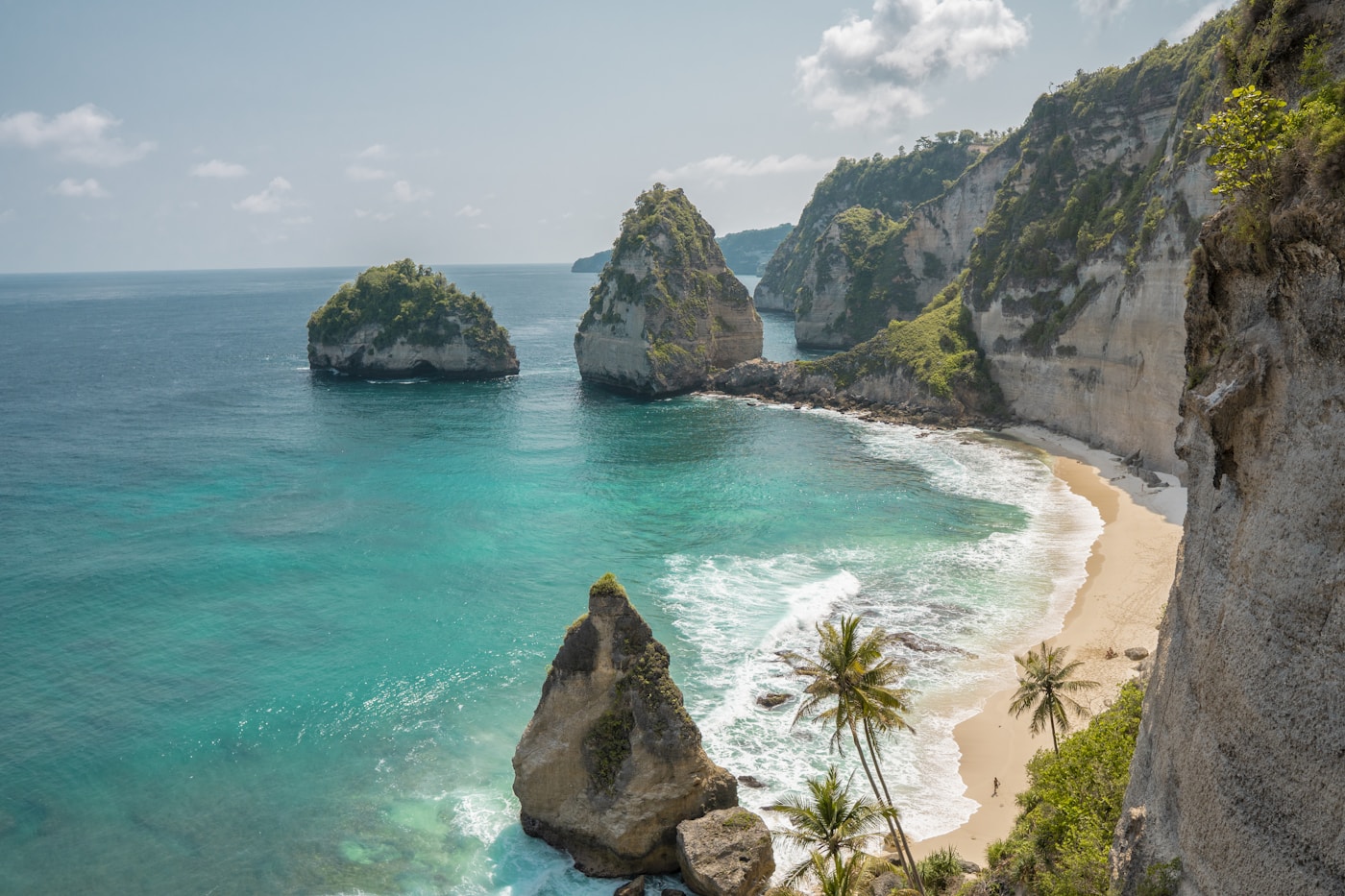
Qinzhou, the Beibu Gulf free trade portChina · population 1.3 million · index 6.5 of 10
An independent report on living in Qinzhou, scored across cost, safety, weather, jobs, healthcare, education, transport, and twelve more axes. No tourism board input. No paid placement.
6.5
Index Score
Qinzhou, ChinaCover · The City Report
№ 01 , The Quick Take
Qinzhou in 200 words.
Qinzhou scored 6.5 on the everycity index in 2026, a coastal port city on the Beibu Gulf in Guangxi, an hour from the regional capital Nanning, betting its future on a free trade port and the China to ASEAN trade corridor while keeping the old craft of Nixing pottery alive. The headline numbers: a central one bedroom rents at 1,900 RMB a month, the monthly all in cost runs 740 dollars for a single resident, the income tax runs from a 3 percent floor to a 45 percent top rate, and the safety score is 7.7 on the same 10 point scale we apply to Tokyo, London, and New York.
The case for Qinzhou runs through the employer base, the cost line, and the setting. The case against, where there is one, is named below in section 12. If you want the comparison view instead, start with Hong Kong vs Shanghai or Chengdu vs Singapore, then return here for the deep read. The full China country report covers the national context, and Asia places the city on the regional table.
The data feeding this report is drawn from the sources listed at the foot of the page and explained on our 2026 cost of living report and the methodology page. Numbers are May 2026 unless stated otherwise. Currency is local with a dollar conversion where the original is not the dollar. The index blends 18 weighted inputs, from rent to internet speed, into the single figure in the badge above.
One reading note. This is the long form report. If you only want the headline figure, the city score generator returns the index with custom weights in 30 seconds, the cost converter tells you what your home salary needs to become here, and the relocation score tool grades your current city against this one out of 100. Skim the section eyebrows and jump to the question you came with.
№ 02 , Cost of Living
The monthly arithmetic.
Fourteen line items priced in May 2026 for a single resident in a central one bedroom. Family of four numbers run 2.4 times the single resident figure.
Line item
Cost, single resident, central
Rent, central one bedroom1,900 RMB
1,900 RMB
Rent, suburban two bedroom2,600 RMB
2,600 RMB
Family three bedroom rent4,000 RMB
4,000 RMB
Groceries, single185 dollars
185 dollars
Groceries, family500 dollars
500 dollars
Public transport pass15 dollars
15 dollars
Utilities, average41 dollars
41 dollars
Internet, 300 Mbps12 dollars
12 dollars
Coffee, take away3.30 dollars
3.30 dollars
Beer, supermarket0.95 dollars
0.95 dollars
Beer, bar3.60 dollars
3.60 dollars
Dinner for two, mid13 dollars
13 dollars
Gym membership26 dollars
26 dollars
Mobile phone plan9 dollars
9 dollars
Total monthly all in for a single resident in a central one bedroom: 740 dollars. That puts Qinzhou in the same cost band as Nanning, Haikou, and Zhaoqing when normalized to the same May 2026 basis. For the family of four equivalent, multiply by 2.4 and you reach a higher figure before private school.
For international transfers and a multi currency account during the move, Wise gives a rate consistently within 0.5 percent of the mid market reading. Booking the first month in a serviced apartment through Booking.com while you find a long term contract is the standard play. The cheapest cities ranking, the cheapest cities for expats ranking, and the cheapest cities in Asia ranking show where this figure sits against the field.
Reader question we get often: how do costs compare on a purchasing power basis. The cost converter tool takes a salary in your home city and returns the equivalent number here, adjusted for tax and currency. The quiet cost new residents underestimate is the lease itself: the standard two to three month deposit plus a one month agent fee. The relocation checklist has the line by line, and the family budget guide models the realistic all in figure across 30 destination cities for households with children.
Salary equivalent
What does your salary need to look like in Qinzhou?
Equivalent in Qinzhou
$9,867
Adjusted for cost of living, tax position, and currency. Recalculated against a 740 dollars a month baseline.
№ 03 , Safety
A 7.7 read on streets, day and night.
Qinzhou scored 7.7 overall. The breakdown matters more than the headline.
Overall7.7
Solo female, day7.9
Family with kids8.0
After dark, central7.3
Against the rest of the index, Qinzhou sits at 7.7 overall. The safest cities ranking places Singapore at 9.5 and Tokyo at 9.4 as the East Asian anchors; for comparison London reads 7.4 and New York 7.6. The four categories behind the score are violent crime, property crime, traffic safety, and emergency response time. Qinzhou reads 7.7, the orderly profile of a mid sized Chinese coastal city, with the 7.3 night figure pointing toward the central districts over the port and industrial fringe after dark.
The solo female safety ranking and the family safety ranking show how the city scores on those axes against the field, and the regional safest cities in Asia ranking places it among its neighbours. Carry an international policy from SafetyWing for the first months while local cover is arranged, register with the local authorities within the qualifying window of arrival, and read the full safety methodology on the methodology page before you weight this section against the others.
№ 04 , Weather
The climate in plain numbers.
Cwa humid subtropical. 95F humid summers with a typhoon season, 60F mild winters, very little cold.
Qinzhou shares the warm wet coastal climate of the Beibu Gulf, with summer the demanding season. The best months to live in Qinzhou are November, December, March, April. The worst, in our reader survey, were the July to September typhoon and humidity window. For a city that can match your home weather, the climate match tool is the cleanest start, and the best month to visit tool returns the optimal window for a scouting trip. For seasonal planning, the best weather ranking and the best weather ranking are the standard cross references.
Climate practical notes for Qinzhou: the indoor climate is built for the season the city does not handle, so pay attention to heating, air conditioning, and building insulation when choosing a flat, because the cost lands on the tenant. Air quality is a separate variable that residents read seasonally; if you have asthma or a young child, check the monthly pattern before you sign a lease. Residents who plan to stay a decade or more should read the climate resilient cities article, which ranks the cities we track on flood, heat, and storm exposure before they commit to buying property.
№ 05 , Jobs and Salary
Who pays, and how much the tax takes back.
Salary medians are May 2026, from Glassdoor, Levels.fyi, and national statistics. Tax figures are from the official revenue authority.
Role, mid level
Median salary
Senior
Port and logistics manager23,000 dollars
Mid level23,000 dollars
Senior44,000 dollars
Software engineer20,000 dollars
Mid level20,000 dollars
Senior38,000 dollars
Marketing manager14,000 dollars
Mid level14,000 dollars
Senior27,000 dollars
Qinzhou is a port and free trade city, so the strongest salaries sit in logistics, petrochemicals, and the trade economy rather than tech. The major employers in Qinzhou are the Qinzhou Port and the Beibu Gulf free trade port operations, the Sinopec and petrochemical base, the China to ASEAN logistics and processing zone, Beibu Gulf University, and the Nixing pottery workshops. The take home math is sensitive to deductions; the tax calculator tool is the cleanest way to run a real offer. For benchmarking, the highest paying cities ranking, the highest paying cities in Asia ranking, and the cities for tech jobs ranking cover the field on one chart.
Note on tax: the income tax runs from a 3 percent floor to a 45 percent top rate. Run your own number, not the headline, because the effective rate after standard deductions lands well below the marginal top. Working culture is its own variable here; the typical schedule is 45 to 50 hours a week in the port, logistics, and industrial roles that anchor the city, and negotiating the contract before signing matters more than in most cities. The visa guide 2026 covers the path and the timelines, the spouse visa guide covers the dual income question that two thirds of relocating families underestimate, and the relocation checklist lists the documents recruiters skip.
№ 06 , Neighborhoods
Where to actually live.
Six neighborhoods, each with the rent number and a one line verdict.
Qinnan urban core
the main southern urban district with the markets and the river, 1,900 RMB for a one bedroom
Qinbei
the northern district with newer value stock, 1,750 RMB for a one bedroom
The free trade and port zone
industrial housing near the port and the bonded area, 1,700 RMB for a one bedroom
Sanniangwan coast
the seaside blocks near the dolphin coast, the lifestyle choice, 1,800 RMB for a one bedroom
The new administrative area
the planned civic district with wide roads and new towers, 1,950 RMB for a one bedroom
The old pottery quarter
character blocks near the Nixing pottery workshops, 1,650 RMB for a one bedroom
For long term rentals beyond the first month, the agent fee and a deposit of two to three months upfront is the local norm; the listings platform guide covers the inventory, and the relocation checklist lists the paperwork. Two rules of thumb the data supports: the second ring out from the center is almost always the best value, cheap enough to feel like a discount and central enough to feel central, and the district directly adjacent to the most expensive one tends to rise next.
№ 07 , Healthcare
The system, the cost, the wait.
Healthcare scored 6.5 on a 10 point scale. The methodology weights access, cost, and outcomes equally.
Qinzhou runs the standard Chinese public hospital system for routine care and leans on Nanning for complex cases. The local system in Qinzhou runs through the Qinzhou First People's Hospital and the Second People's Hospital, with the Nanning tertiary network about an hour away by high speed rail. The fastest route for routine specialist care is the private tier or a VIP wing at a top public hospital, where the wait collapses from weeks to days.
For new arrivals: pick up an interim international policy from SafetyWing or Cigna Global while residency papers process, then switch to the local system. Double cover is the most common mistake new residents make, and it costs an extra 600 to 1,400 dollars a year. The expat insurance guide covers the trade off, and the expat mental health guide covers the slowest stream in any public system. Families should also read the best cities for families ranking.
Dental and vision typically sit outside the main coverage. A cleaning runs 40 to 120 dollars at the private clinic tier, a filling 60 to 240 dollars, an annual eye exam 30 to 110 dollars. For prescription medication, the local pharmacy network beats anything you can import, so bring two months of supply and switch to the local equivalent on arrival. Mental health is the slowest public stream, with three to nine month waits for a non urgent psychiatry appointment that private cover collapses to two to four weeks.
№ 08 , Education and Family
Schools, if you have kids.
The international option, the local option, and the cost of each.
For schools, the options come down to local public schools, with the international and bilingual options concentrated in Nanning, and Beibu Gulf University for higher education. International and premium bilingual fees run 50,000 RMB (6,900 dollars) at the entry tier and 110,000 RMB (15,200 dollars) at the premium tier. Local schools, where they accept foreign children with the qualifying residence permit, are nominal in cost and vary by district.
The family rating weights school quality, park access, safety, healthcare, and the cost of a three bedroom flat; the best cities for families ranking has the full table. The relocating with kids guide covers the admissions calendar, which in most markets runs the application window months ahead of the start of the school year, and the family budget guide models the realistic monthly figure for a family of four.
Beyond school, the family experience is shaped by what is free. Public parks, public libraries, public pools, and free museum days are the four amenities that change a family budget the most. For the working couple, day care runs another 300 to 1,200 dollars a month at the private bilingual tier, and for the parent who wants a working level of the local language inside six months, Babbel is the cleanest entry point.
№ 09 , Transport
Walk, ride, or drive.
Walkability 6.6, transit 6.0, bike 6.8. Car needed: No.
Walk6.6
Transit6.0
Bike6.8
Car neededNo
Qinzhou runs a bus network and the Qinzhou East high speed station links Nanning and the coast, while the flat coastal terrain makes the bike a real option for the central districts. For relocation scouting trips and the first two weeks before a local card arrives, a rental from Discover Cars covers most needs at 40 to 80 dollars a day. Beyond that, the need for a car here is set by where your work and home sit relative to the network.
Airport access is the variable most new residents underweight. Nanning Wuxu International Airport is the gateway 90 minutes away, with the high speed rail covering the regional links. For frequent flyers, connectivity and the cost of a domestic hop matter more than the headline; the best cities for digital nomads ranking tracks the connections that count for the global traveler, and the cities for public transit ranking places this city on the wider transport table.
№ 10 , Culture and Cuisine
What makes Qinzhou itself.
The food signatures, the nightlife rating, the cultural calendar.
Qinzhou balances a craft heritage with a modern port ambition. Food in Qinzhou is Beibu Gulf seafood and Guangxi cooking; the oysters and sea snails the gulf is known for, the rice noodle dishes that Guangxi runs on, and the local snail and fish preparations. The nightlife scores 5.6 on the 10 point scale, weighted on bar density, late hour transport, and the diversity of the scene; the best cities for nightlife ranking places that in context.
Nixing pottery, one of the four famous pottery traditions of China, is made here from the local clay, the Sanniangwan coast is known for its resident dolphins, and the memorial halls to the Qing era generals Liu Yongfu and Feng Zicai anchor the civic history. Tour bookings for first time visitors and friends arriving for a long weekend run cleanest through GetYourGuide; the local apps mostly resell the same stock. The cities for foodies ranking lists the food capitals on a single chart.
Two underrated reads on cultural fit: how late the city eats, and how the social calendar runs along the working week. Qinzhou keeps its own rhythm on both, and that one variable changes more about settling in than new arrivals expect. Give it a season before you decide the place does not fit; most readers who left in the first three months later said they judged it too early.
№ 11 , Remote Work
Internet, visas, and where to plug in.
Median internet speed 115 Mbps. Coworking density: 5 spaces. Nomad visa: No.
The remote work rating for Qinzhou turns on three numbers. The internet median at 115 Mbps, the coworking density at 5 spaces, and the time zone overlap with the major employer hubs. Qinzhou carries a 115 Mbps median and a small coworking scene built on the port and university crowd. For a privacy layer on local networks and access where restrictions apply, NordVPN is the cleanest option we have tested. The best cities for remote work ranking covers the full table.
For nomads, the visa story is the biggest variable. mainland China issues no digital nomad visa, so foreign remote workers enter on a work or study basis and track the 183 day tax residency rule. The nomad visa guide 2026 tracks the eligibility, the cost, and the tax residency triggers across the cities that now offer one, and the nomad visa cities ranking and the best cities for digital nomads ranking keep the macro view.
On coworking specifically, the density figure of 5 spaces hides a wide quality range. Premium operators charge a clear markup for a hot desk, the mid market option that most residents actually use runs lower for unlimited access plus mail handling, and a strong home fibre line at the speeds above makes a dedicated desk optional for many. The cities for expats ranking and the fastest internet ranking track how the whole package compares across the field.
№ 12 , The Verdict
Who should move to Qinzhou, and who should not.
Qinzhou is a southern Guangxi posting for the logistics and trade professional with a reason to be on the Beibu Gulf, with Nanning close enough to fill the amenity gap. A logistics manager at the port clears 44,000 dollars at the senior tier, a central one bedroom in Qinnan runs 1,900 RMB a month, and the single resident budget lands at 740 dollars. The seafood is excellent and cheap, the winters are mild, the Nixing pottery tradition gives the place a real identity, and the high speed rail puts Nanning an hour away. The trade off is the typhoon season, the developing rather than developed feel of a city still building its free trade bet, and the thin international bench. If your work sits in shipping, petrochemicals, or the China to ASEAN trade, Qinzhou is a low cost coastal base. If you want full city amenities, live in Nanning and commute to the coast.
One letter a month. Twelve city updates, three comparison verdicts, the cost of living shifts that move the index. No sponsored content.
Sources, May 2026. Numbeo cost of living index May 2026 · Mercer Cost of Living Survey 2026 · OECD Income Distribution Database 2025 · World Bank Open Data 2025 · Speedtest Global Index April 2026 · EIU Safe Cities Index 2024 · national statistics offices and tax authorities for headline rates · Glassdoor and Levels.fyi for salary medians. First published May 25, 2026. Last updated May 25, 2026.